
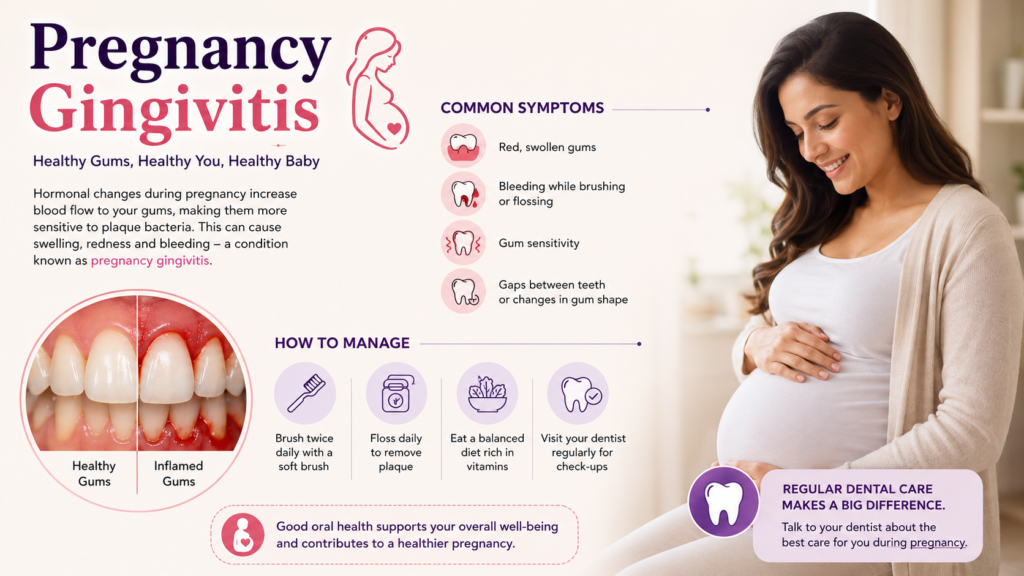
Expecting a child brings a multitude of physical transformations in a mother. However, one area that often catches people by surprise is their oral health. If your gums have become tender, swollen, or bleed during your morning routine, you are likely experiencing pregnancy gingivitis. This condition is a common result of hormonal fluctuations, but with the right approach and right information, it is entirely manageable.
What is Pregnancy Gingivitis and Why Does it Happen?
Understanding the biological cause of these changes can alleviate a lot of the worry. So, what is pregnancy gingivitis exactly?
- During pregnancy, the body produces significantly higher levels of progesterone.
- This hormone increases blood flow to the gum tissues, making them far more sensitive to the bacteria found in plaque.
Even if your oral hygiene was impeccable before, your body now reacts more aggressively to minor amounts of buildup. This heightened inflammatory response is the primary reason why pregnancy gingivitis affects a large percentage of expectant mothers.
Simply, it is not a sign of poor hygiene, but rather a sign that your gums require extra attention during this period.
Recognising the Symptoms
Identifying the signs early allows for swifter management. While most people notice redness or bleeding, others may notice more specific changes when researching what is pregnancy gingivitis.
- Swelling and Redness: Gums may appear dark red or purple rather than a healthy coral pink.
- Bleeding: Blood on your toothbrush or during flossing is a hallmark of the condition.
- Recession and Gaps: Sometimes, inflammation can cause the gum line to pull back, which might look like a small hole in gum tissue or a gap between the teeth where food frequently gets trapped.
- Sensitivity: Discomfort when consuming cold or hot beverages.
If you notice a persistent hole in gum area or a localised growth, it is often a pregnancy epulis—a harmless but annoying swelling that usually resolves after birth.
Did you know? Oral bacteria can travel through the bloodstream to the placenta. This makes managing pregnancy gingivitis essential for systemic health, ensuring a safer environment for your developing baby.
How to Treat Pregnancy Gingivitis at Home
If you are wondering how to treat pregnancy gingivitis, the solution lies in disrupting the plaque biofilm as gently and effectively as possible.
Optimise Your Cleaning Routine
Consistency is your best tool. Brush twice a day with a soft-bristled brush to prevent further irritation.
- Use a fluoride toothpaste and ensure you are cleaning right up to the gum line.
- After brushing, spit out the excess paste but do not rinse with water, as this allows the fluoride to continue protecting your enamel and gums.
Interdental Care
Daily flossing or the use of interdental brushes is non-negotiable.
- Because the inflammatory response is so high, removing the plaque between teeth is a critical step in how to treat pregnancy gingivitis.
Dietary Adjustments
Limit sugary snacks and drinks, which feed the bacteria responsible for inflammation.
- Instead, focus on foods rich in Vitamin C and Calcium to support tissue repair and bone health.
Did you know? Rising progesterone levels alter how the body reacts to plaque. This causes gums to overreact to tiny amounts of buildup that would usually not cause any irritation or swelling whatsoever.
The Role of Professional Dental Care
While home care is the foundation, professional intervention is often necessary to clear tartar that a toothbrush cannot reach. This is where preventive dentistry becomes a vital part of your prenatal care.
Some of the most important benefits of professional care during pregnancy include:
- Early removal of plaque and tartar buildup that contributes to pregnancy gingivitis and persistent gum irritation.
- Professional monitoring of gum health to detect periodontal pockets, inflammation, or tissue recession before symptoms worsen.
- Guidance on protecting enamel from repeated acid exposure caused by morning sickness or reflux.
- Personalised oral hygiene plans that adapt to pregnancy-related sensitivities, fatigue, and dietary cravings.
- Reduced risk of minor dental problems becoming painful or complex later in pregnancy.
How Dental Treatments Can Help a Mother
For Your Healthy Smile Dentists, compassion and gentleness is always a priority when guiding you through various remedies available. It often begins with expertise that lays upon transparency.
Below is a table that can be referred to understand how each aspect of professional dental care includes:
| Treatment | How it Benefits the Expectant Mothers |
| Professional Scaling | This removes hardened plaque and tartar that contribute to gum inflammation, bleeding, and bacterial accumulation around the gumline. |
| Fluoride & Enamel Protection | We help strengthen enamel weakened by frequent vomiting or acidic dietary changes common during pregnancy. |
| Gum Assessment | We can check for periodontal pockets, pregnancy gingivitis, and early signs of gum disease before they become more severe. |
| Preventive Monitoring | Allows us to track oral changes throughout pregnancy and address issues before they require complex treatment. |
A Healthy Smile for a Healthy New Chapter
Managing your oral health is a vital part of your prenatal care plan. By focusing on preventive dentistry, you are not only protecting your own teeth and gums but also supporting your child’s oral health.
That is why, for all things that revolve around nurturing and upcoming cackles, Your Healthy Smile Dentists at St Clair are here for you. So, share your concerns and we’ll do our best to secure a healthier future for you and your child.
FAQs
Q1. What is pregnancy gingivitis and how can I distinguish between normal sensitivity?
Normal sensitivity usually passes quickly, whereas pregnancy gingivitis involves persistent redness, swelling, and bleeding that occurs even with very gentle brushing or flossing.
Q2. Does every pregnant person get this condition?
While pregnancy gingivitis affects between sixty and seventy-five percent of expectant parents, it is not universal. Those with very low plaque levels and excellent pre-existing oral health may experience very few symptoms.
Q3. Is it safe to visit a dental clinic while expecting?
Yes, it is highly recommended. Many people search for the best dentist near me to ensure they have professional support during their trimesters. Routine check-ups and cleanings are safe and essential for preventing complications.
Q4. Will symptoms related to gums go away after I give birth?
In most cases, pregnancy gingivitis resolves naturally after delivery once your hormone levels return to their baseline. However, maintaining a strict hygiene routine is necessary to ensure no permanent damage occurs in the meantime.
Q5. How does morning sickness affect a mum’s teeth?
Stomach acid can weaken enamel and irritate the gums. Incorporating preventive dentistry techniques, such as rinsing with water and bicarbonate of soda after vomiting, can help neutralise the acid.
Q6. Which foods support healthier gums?
The best way to practice preventive dentistry through diet is to eat plenty of leafy greens, citrus fruits for Vitamin C, and dairy products for Calcium. These nutrients support the repair of gum tissues and bone.
Q7. Should mothers only use a specific type of mouthwash?
As part of your preventive dentistry routine, choose an alcohol-free fluoride mouthwash. Alcohol-based versions can dry out the mouth, which may lead to more bacterial growth and increased irritation.