
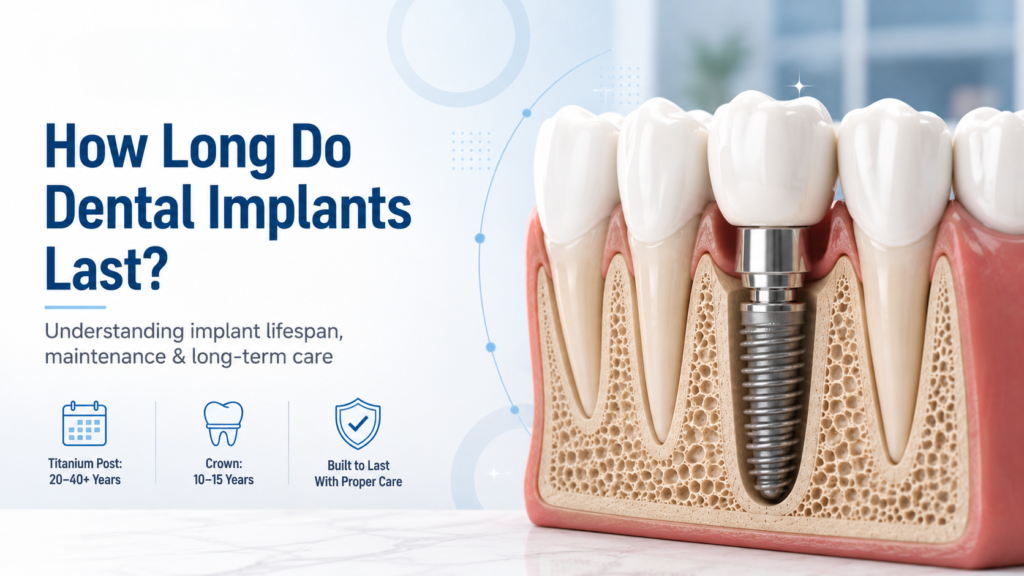
Dental implants are a very durable and reliable option for replacing missing teeth today. But how long do dental implants last? The answer is easily more than a decade on an average.
This is where learning about the factors affecting its longevity, knowing how to maintain dental implants, and understanding its components makes the difference.
The Two Components of a Dental Implant
1. Titanium Post
- Acting as an artificial tooth root, it is surgically placed into the jawbone, where osseointegration leads to our jawbone fuse with the titanium.
- Because titanium is highly biocompatible, this foundation is permanent and can easily last 20 to 40 years, or even a lifetime.
2. Prosthetic Crown
- Unlike the titanium post, the crown (the visible tooth replacement attached to the post) is exposed to the daily wear and tear of biting and chewing.
- Consequently, a crown typically requires replacement or refurbishment every 10 to 15 years.
You can read more about what dental implants are made from on our website.
How Long Do Dental Implants Last?
Data from our experience, the Australian Dental Association, and independent studies all indicate exceptionally high success rates for dental implants.
Timeframe | Average Survival Rate | Primary Outcomes |
| 5 Years | 95–98% | High initial stability following successful osseointegration (bone fusion). |
| 10 Years | 95–96% | Most implants remain fully functional with minimal surrounding bone loss. |
| 20 Years | 80–90% | The titanium implant fixture typically remains secure, although the crown or restoration may require replacement due to normal wear and tear. |
Good to know: Various types of dental implants exist. Read more on what are the different types of dental implants in detail here.
Major Factors Influencing Dental Implant Longevity
While designed to be permanent, several factors determine how long an implant will last. Before understanding the actions defining the answer to how long do dental implants last, let’s know the factors affecting longevity.
Oral Hygiene and Maintenance:
- Poor cleaning habits can lead to a condition known as peri-implantitis.
- This is an inflammatory disease caused by bacterial plaque that attacks the gums and the bone surrounding the implant, potentially leading to the fixture loosening and failing.
- Dental check up and clean sessions are vital in this case.
Your Lifestyle Habits
- Smoking is one of the leading causes of early and late implant failure.
- Nicotine restricts blood flow to the gums and bone tissue, which significantly impairs the healing process and reduces the long-term success rate by approximately 10 %.
Your Bone Density and Volume
- A successful implant requires a robust volume of healthy jawbone to ensure stability.
- If a patient experiences bone loss prior to the procedure, a bone graft may be required to secure the foundation.
Medical Conditions
- Conditions that affect your immune system or bone metabolism, such as uncontrolled diabetes or osteoporosis, can increase the risk of failure.
- However, Your Healthy Smile Dentists find that patients with well-managed diabetes show success rates comparable to healthy individuals.
Bruxism or Teeth Grinding
- Severe teeth grinding or clenching puts excessive biomechanical stress on both the post and the crown.
- This can lead to structural fractures or premature wear of the prosthetic component.
- A protective night guard is frequently recommended in these instances.
How To Take Care of Your Implants
Maintaining an implant requires a dedicated daily routine focused on keeping the gum tissue healthy and plaque-free.
- Use a soft-bristled toothbrush, either manual or electric and clean around the implant thoroughly, especially at the gum line where the crown meets the tissue.
- Clean the sides of the implant daily using thick floss designed specifically for implants, or use an interdental brush. If you use an interdental brush, ensure the internal wire is coated in nylon rather than bare metal to prevent scratching.
- We find that a simple water flosser is exceptionally effective at flushing out trapped food particles and bacteria deep under the crown margins. It also does it without disrupting the delicate gum seal.
Want them cleaned on priority? Visit our St Clair dental clinic, where our specialised cleaning instruments safely clean the titanium post without affecting its surface. Search for ‘orthodontic near me’ to find us quickly.
Mistakes to Avoid To Improve Your Implant Longevity
To protect the structural integrity of your dental implant, you should actively avoid these common mistakes:
- Avoid charcoal, baking soda, or intense whitening toothpastes. These are highly abrasive and can scratch components, making the surfaces more susceptible to plaque buildup.
- Never attempt to pick at the implant base with metal objects. This is because metal can scratch the implant’s polished collar, creating microscopic grooves where harmful bacteria can easily multiply.
- Resist ripping open plastic packaging or cracking nuts, as this can lead to porcelain fractures or loose internal screws.
- If you wake up with a sore jaw or have a history of clenching your teeth at night, it is important that you discuss it with Your Healthy Smile Dentists in St Clair. Not acting on this wear can break the bond between the bone and the post.
What you must know: Assuming that implants do not need professional maintenance because they cannot get cavities is a major misconception. Plaque can still harden into calculus around the gums. Read more on the pros and cons of dental implants.
Get the Right Dental Care Today
While tooth implant cost and aftercare efforts can vary, Your Healthy Smile Dentists can help in managing the expenditure.
For more information on dental implants, feel free to contact us at (02) 9670 6991.
You can also find Your Healthy Smile Dentists at 154 Bennett Rd, St. Clair by searching for orthodontic near me.
FAQs
1. Are Dental Implants Painful? What should I expect during and after the placement?
During the procedure, local anaesthesia ensures you feel no pain. For a closer look at what to expect during recovery and to address any anxieties, read our guide, which outlines post-operative management and effective pain relief strategies.
2. What are my budget-friendly tooth replacement options?
Managing the financial aspect of treatment requires understanding the payment aspect. Read our guide to affordable dental implants in 2026 to discover how clinics structure treatment fees and offer flexible financing to make care accessible.
3. Which are the most noticeable benefits of dental implants?
Improved chewing function, jawbone preservation, and natural aesthetics are among the most promising benefits of getting dental implants. Learn about others in our article on the top 7 benefits of dental implants in Australia.
Reviewed By Dr. Lekha Menon