
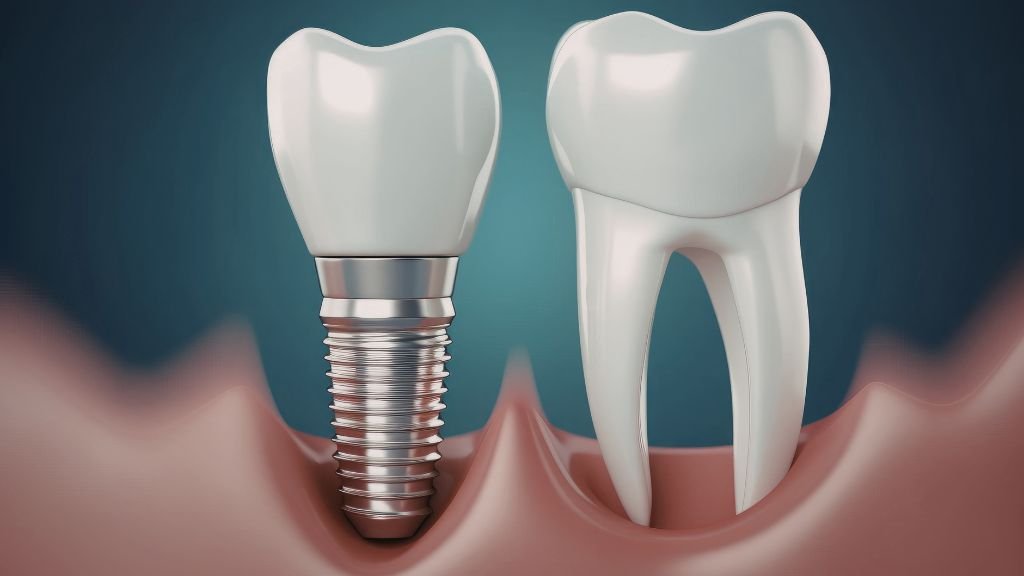
Dental implants offer a permanent fix for tooth loss while preserving the facial structure. By fusing with your jawbone, they remove the instability and speech issues associated with removable prosthetics. However, while evaluating the dental implants cost involved, it is important to know the risks and the impacts on functionality.
What are Dental Implants and Their Benefits?
Dental implants are surgical-grade posts that replace the missing tooth roots. Through osseointegration, these titanium or zirconia posts fuse with the jawbone and provide a stable foundation for a custom crown.
- The process involves evaluating bone density and mapping.
- A three to six month period is necessary to allow your jawbone to fuse with the implant surface.
Next, let’s understand what affects the dental implants cost and how they benefit you in ten ways.
Preservation of the Jawbone
The Benefit: Implants are the tooth replacement option that prevents bone resorption and facial collapse which typically occurs after a tooth loss.
The Challenge: If a patient has been missing a tooth for several years, the bone volume might be insufficient for the procedure. This might necessitate a bone graft or a sinus lift before the implant and can result in additional dental implant costs.
High Success Rates
The Benefit: Today, the success rate for dental implants remains remarkably high, with data showing between 95 and 98 percent of procedures result in a stable, functional tooth.
The Challenge: Uncontrolled diabetes or a history of smoking can impact the success rate. Your Healthy Smile dentists recommend sharing the details before the surgery.
Impact on Neighbouring Teeth
The Benefit: Unlike a traditional dental bridge, an implant is a self-supporting unit. It does not require the dentist to grind or remove the enamel of healthy adjacent teeth.
The Challenge: While this preserves the health of the surrounding teeth, the complexity of placing a standalone post is elevated. This can also potentially result in additional dental implant costs.
Natural Aesthetics
The Benefit: Using zirconia, implants can be designed to be indistinguishable from natural teeth in both colour and shape.
The Challenge: Achieving a uniform aesthetic is a specialised skill that requires years of experience and multiple shade-matching sessions.
Potential for Permanent Longevity
The Benefit: While the crown on top may require a replacement after 10 to 15 years, the titanium or zirconia implant post is intended to last a lifetime.
The Challenge: Longevity is difficult without oral hygiene. Peri-implantitis, an inflammatory condition, can lead to the loss of the implant if hygiene is not maintained.
Retained Chewing Strength
The Benefit: Implants allow in retaining most of the natural biting force. With it, you can continue eating tough, fibrous, or crunchy foods with ease.
The Challenge: There stands a risk of mechanical failure if you suffer from bruxism or teeth grinding. Excessive pressure can chip the ceramic crown or loosen the internal screw, necessitating repairs or the use of a mouthguard.
Clarity of Speech
The Benefit: Because implants are fixed directly into the jaw, they eliminate the clicking sounds or the slurring of words often experienced with dentures.
The Challenge: During your initial healing, there can be a minor phonetic adjustment phase. You might experience temporary lisps while the tongue learns to move around the new prosthetic.
Convenience of a Fixed Solution
The Benefit: Implants behave like natural teeth and do not require messy adhesives, special soaking solutions, or removal at night.
The Challenge: Bacteria can easily accumulate at the base of the implant where it meets the gum, requiring the use of specialised interdental brushes or water flossers for cleansing.
Precision of Surgery
The Benefit: 3D imaging and preliminary tests help us confirm that the post is placed with sub-millimetre accuracy, avoiding nerves and the sinuses.
The Challenge: At times, patients struggle to decide between manual and guided mode of surgery. Your Healthy Smile Dentists emphasise precision to achieve better outcomes. To support further, convenient payment options are available with us.
Confidence and Wellbeing
The Benefit: Implants provide a secure feeling that can boost your self-esteem. It is especially relatable if you’ve struggled with the instability of dentures for years.
The Challenge: The time from the initial consultation to the final tooth placement can span a few months. This is where support and guidance is essential.
Transform Your Smile Today
When weighing the pros and cons of dental implants, patients find that while they offer superior durability and natural function, the treatment can involve a multi-stage programme, investment, and patience.
But don’t worry because we are here to guide you through the entire process.
With Your Healthy Smile Dentists, compassion plays a pivotal role in every visit. We have delivered worry-free smiles across St Clair, Erskine Park, Colyton and St Marys communities and now, you too can have one for yourself.
FAQs
Q1. In dental implants, what is the typical duration from the first consultation to the final tooth placement?
For most patients, the process takes between four and nine months. This timeline accounts for the initial surgery, a three to six month period for osseointegration, and the final fabrication of the custom crown.
Q2. Are the surgical procedures performed under general anaesthesia?
Most single or dual implant placements are performed using local anaesthesia. However, patients with dental anxiety or those undergoing full-arch restorations often opt for IV sedation or general anaesthesia in a hospital setting.
Q3. Is there an upper age limit for receiving dental implants?
There is no maximum age. As long as a patient is in good general health and possesses sufficient bone density, implants are successful for individuals in their 70s, 80s, and beyond.
Q4. How painful is the recovery period after dental implants?
Most patients report that the discomfort is manageable and comparable to a tooth extraction. Any swelling or minor pain usually subsides within three to five days with the use of standard over the counter analgesics.
Q5. What are the early warning signs of an implant failing?
Signs include persistent pain, swelling that does not subside, or a feeling of looseness in the implant post. These symptoms may indicate an infection or a failure of the bone to fuse correctly.