
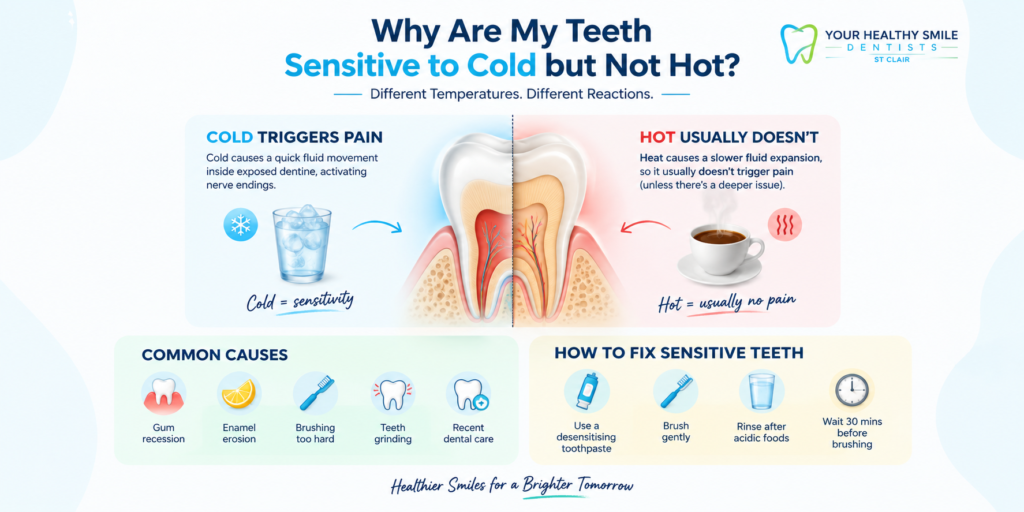
If you have teeth sensitive to cold but not hot food, you are experiencing exposed dentine and not deep nerve issues. This occurs because low temperatures trigger a rapid fluid shift inside microscopic tooth tubules, which makes sensitive nerve endings reactive.
Studies on dentine hypersensitivity reveal that cold stimuli represent the most frequent trigger reported across dental clinics. This week, Your Healthy Smile Dentists help you understand your teeth and temperature sensitivity, possible causes and remedies, including professional diagnosis on how to fix sensitive teeth.
Temperature Sensitivity and Your Teeth
To understand why one experiences teeth sensitive to cold, the microscopic layout of a tooth must be examined.
Beneath the hard enamel exterior lies dentine. This porous layer contains thousands of microscopic fluid-filled channels known as dentinal tubules. These tubules lead straight to the inner pulp chamber, housing sensitive nerves and blood vessels.
This is where hydrodynamic theory is in action:
- Fluid Contraction: Cold liquids or chilly air cause fluid inside dentinal tubules to contract rapidly.
- Hydraulic Shift: This contraction triggers a sudden outward movement of fluid toward the tooth surface.
- Nerve Pulling: The swift fluid motion physically pulls on nerve endings inside the pulp chamber.
- Instant Reaction: The central nerve registers this mechanical pressure change as a sudden, sharp sting.
On the other hand, Your Healthy Smile Dentists find that while heat causes fluid expansion, it occurs at a far slower pace. When a tooth reacts intensely to warm items, it typically signals advanced pulp inflammation rather than surface exposure because mild enamel wear rarely causes heat sensitivity.
Primary Causes of Exposed Dentine
We mentioned earlier that exposed dentine is often associated with teeth sensitive to cold. This is because healthy enamel shields the upper tooth, while gum tissue protects the root. When either barrier breaks down, exposed tubules interact directly with temperature shifts.
| Primary Cause | Mechanism of Action | Visible Sign |
| Gum Recession | Your gum tissue moves away from the tooth, exposing the root surface. This may occur with aggressive brushing or gum disease. | Teeth may appear longer, with yellowish root surfaces visible near the gumline. |
| Enamel Erosion | Acids from drinks, foods or gastric reflux gradually dissolve the enamel surface. | Translucent edges, smoother surfaces and increased yellowing as underlying dentine becomes more visible. |
| Mechanical Wear | Prolonged brushing with excessive pressure or stiff bristles can wear away tooth structure. | Small grooves, notches or flattened areas, often close to the gumline. |
| Teeth Grinding | Repeated clenching or grinding places excessive force on the teeth, gradually wearing down enamel. | Flattened biting surfaces, small cracks or chips and, in some cases, morning jaw soreness. |
| Recent Dental Care | Whitening, fillings or other dental procedures might temporarily irritate the tooth’s nerve tissue. | Short-term sensitivity, typically settling over several days but sometimes lasting a few weeks. |
How to Fix Sensitive Teeth: Home Care and Professional Options
Understanding how to fix sensitive teeth involves combining effective daily routines with professional treatments. Strategies include calming reactive nerves while rebuilding physical barriers over exposed pathways.
What you can do at home
- Select Desensitising Formulations: Toothpastes containing potassium nitrate work by calming nerve pathways over time, whereas formulations with stannous fluoride or arginine physically block open tubule entrances. After discussing with your dentist, consistently using for two weeks allows these active ingredients to build a protective barrier.
- Refine Brushing Technique: Replace hard bristles with softer ones. Hold the brush at 45° to the gumline, and brush with light circular motions. Vigorous scrubbing strips away thin protective layers over time.
- Neutralise Acidic Exposures: Citrus fruits, wine and carbonated beverages are known to soften enamel. Rinsing with plain tap water immediately after eating helps neutralise acidity without damaging softened surfaces. Better Health Channel talks about how dietary acid exposure and physical wear progressively dissolve surface minerals.
- Delay Brushing After Eating: Wait at least thirty minutes after meals before brushing. This window allows saliva to remineralise enamel naturally.
Targeted Clinical Solutions
When home care is insufficient, structured professional dental care provides lasting protection.
- Protective Fluoride Applications: Concentrated fluoride varnishes are applied to vulnerable areas to strengthen enamel and seal open channels.
- Composite Resins and Sealants: Resins cover exposed root areas, insulating delicate nerve channels from cold fluids.
- Custom Occlusal Splints: For individuals with bruxism, a custom mouthguard cushions biting surfaces to prevent structural enamel loss.
- Tissue Restoration: In severe cases where gum recession leaves roots exposed, soft tissue procedures cover vulnerable surfaces and restore natural gum height.
Searching ‘dentist near me’ for fluoride treatment?
Knowing When to Seek Professional Diagnosis
While mild cold sensitivity is common, certain symptoms require professional evaluation.
Discomfort lingering for more than fifteen seconds after the cold source is removed points to deeper nerve involvement. Moreover, pain developing spontaneously without a trigger, or isolated pain while chewing, warrants prompt clinical attention.
This is where Your Healthy Smile Dentists in St Clair can help you with thorough diagnosis and targeted care to deliver lasting comfort.
If you need help with teeth sensitive to cold, call (02) 9670 6991 for an appointment.
FAQs
1. Can vitamin deficiencies cause sensitive teeth?
Deficiencies in vitamin D and calcium weaken enamel mineral density, making outer layers more porous. Low vitamin C levels lead to weakened gum attachments, increasing root exposure.
2. How quickly does desensitising toothpaste work for cold pain?
Most desensitising toothpastes require consistent daily application twice per day for fourteen days to build an effective mineral or potassium barrier inside exposed tubule channels.
3. Can my sinus infection cause cold sensitivity in upper teeth?
Sinus inflammation creates pressure in the maxillary sinus cavity, which sits directly above the roots of upper back teeth. This pressure irritates shared nerve pathways, increasing sensitivity to temperature changes.
4. Can teeth whitening cause cold sensitivity?
Whitening treatments cause temporary sensitivity by opening enamel pores and dehydrating dentine layers. This discomfort resolves naturally within forty-eight hours to a few days after stopping the whitening process.
5. Can acid reflux cause teeth to become sensitive to cold?
Yes. Chronic gastric acid reflux reaches the oral cavity and dissolves protective enamel, particularly on the inner surfaces of upper teeth, exposing sensitive dentine to cold items.

Dr. Lekha Menon
Dr. Lekha Menon is the Principal Dentist at Your Healthy Smile. She graduated from dental school in 1998 and has over 25 years of experience, serving the St Clair community since 2007. She provides personalised dental care with expertise in general and cosmetic dentistry, Invisalign®, orthodontics, dental implants, crowns, veneers, dentures, and root canal therapy.