
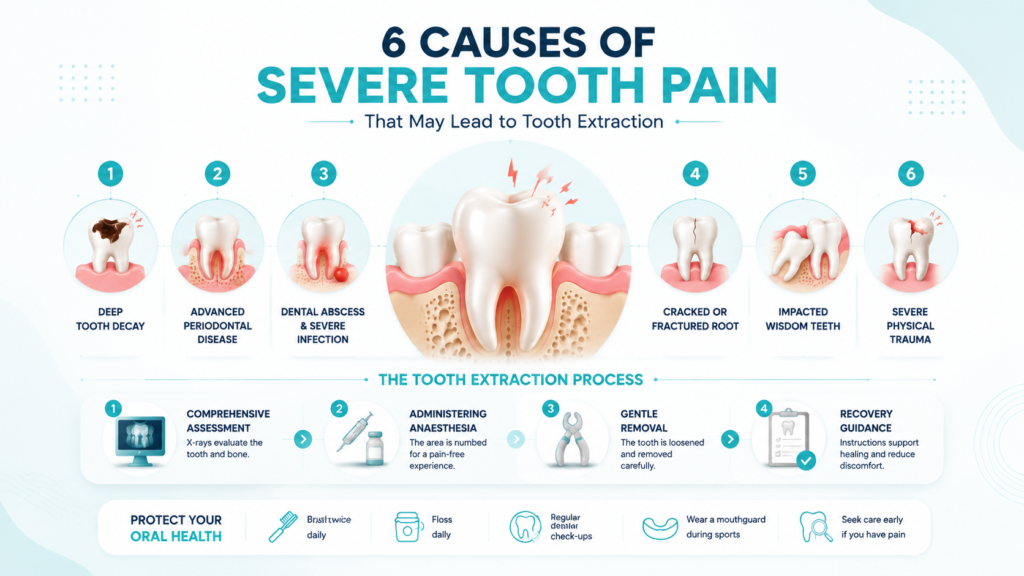
While modern dentistry aims to preserve natural teeth, certain conditions cause damage so extensive that saving the tooth is not the safest or a possible option. In these situations, tooth extraction helps to relieve severe tooth pain, eliminate infection and protect overall oral health.
Understanding why a tooth might need removal can help you spot early warning signs, learn about the extraction process and seek treatment before concerns deepen. Here are six common causes of severe tooth pain that may result in tooth extraction
1.Deep Tooth Decay
When decay goes untreated, it advances from enamel into the central pulp chamber of the tooth. The pulp contains sensitive nerve endings and blood vessels where infection can trigger intense, throbbing severe tooth pain to spread beyond the jaw to your face.
While early decay can be treated with fillings or root canal therapy at Your Healthy Smile Dentists, extensive rot destroys structural support below the gumline. When structural integrity is lost to this extent, tooth extraction becomes necessary to stop pain and prevent decay from spreading to adjacent teeth
2.Advanced Periodontal Disease
Gum disease begins as minor inflammation known as gingivitis. If left untreated, gingivitis progresses into periodontitis, an infection that destroys the gums,
As periodontitis advances, teeth become loose, painful and sensitive. Even if a tooth has no decay, severe bone loss makes it unusable. Because when bone support is permanently lost, tooth extraction is required to protect the surrounding jawbone.
3.Dental Abscess and Severe Infection
A dental abscess is a pocket of pus caused by bacterial infection at the root or gumline. It causes persistent, intense discomfort, facial swelling, fever and a bad taste in the mouth.
While root canal therapy can clean and disinfect infected root canals in many cases, some infections become too advanced to resolve with restorative care.
If an abscess causes massive bone loss around the root structure, root canal treatment may fail. In such cases, tooth extraction is required to drain the infection effectively and allow the surrounding tissue to heal.
4.Cracked or Fractured Root
Cracks happen from trauma, grinding, or large older fillings. While a superficial hairline crack on the outer enamel can often be repaired with a protective crown, a vertical root fracture is far more serious.
A vertical root fracture extends downwards through the crown and deep into the root structure below the gumline. Every time pressure is applied while chewing, the split sections flex against each other, causing sharp, severe tooth pain and chronic gum tissue inflammation.
And because a broken root cannot fuse back together, a vertically split tooth cannot be saved. That is why tooth extraction remains the only reliable treatment in these cases.
5.Impacted Wisdom Teeth
Are wisdom teeth extractions painful? Well, not for everyone.
Wisdom teeth, also known as third molars, are the last set of teeth to emerge, typically appearing between the ages of 17 and 25. Because our jaws sometimes lack sufficient space to accommodate these extra molars, wisdom teeth frequently become trapped or impacted.
This is where the impacted wisdom teeth can push forcefully against adjacent molars, leading to jaw stiffness, overcrowding and localised swelling. In some cases, the partially erupted wisdom teeth can create small flaps of gum tissue that trap food particles and bacteria. This causes painful infections known as pericoronitis.
6.Severe Physical Trauma
Accidental injuries from contact sports, falls or sudden physical collisions can inflict devastating damage on our teeth. This intense force can snap a tooth off below the gumline, shatter the root structure or knock a tooth out of its socket.
Although emergency dental care can sometimes initiate splinting and root canal therapy to stabilise, extensive structural breakage leaves the tooth unsalvageable.
Your Healthy Smile Dentists find that timely assessment of severe tooth pain can help identify problems early and protect your long-term oral health.
Need emergency consultation?When trauma destroys the root or surrounding socket structure, keeping the tooth is no longer viable. In these situations, removing the broken tooth alleviates severe discomfort and prepares the mouth for future restoration, such as a dental implant or bridge.
What to Expect During the Extraction Process
If a tooth cannot be saved, Your Healthy Smile Dentists can ensure that the extraction process is gentle, efficient and comfortable.
- Comprehensive Assessment: High-resolution dental X-rays are taken to evaluate the root shape and surrounding bone structure.
- Administering Anaesthesia: Local anaesthetic is administered to completely numb the target area, eliminating pain during the treatment.
- Gentle Removal: Specialised instruments are used to loosen the tooth gently from its socket before careful removal.
- Recovery Guidance: Detailed post-operative instructions are provided to promote fast healing and minimise post-treatment discomfort.
Protecting Your Oral Health
While sudden physical accidents cannot always be avoided, most causes of severe dental discomfort can be prevented with good habits such as:
- Brushing teeth thoroughly twice every day using fluoride toothpaste.
- Flossing daily to remove plaque and trapped food particles from between teeth.
- Scheduling periodic professional check-ups and cleanings with Your Healthy Smile Dentists every six months.
- Wearing a custom mouthguard during sports to guard against unexpected facial impacts.
- Seeking professional dental care at the first sign of discomfort rather than waiting for symptoms to escalate.
If you are experiencing persistent dental discomfort or have concerns about a damaged tooth, contact Your Healthy Smile Dentists at 154 Bennett Rd, St. Clair to schedule a consultation and secure a healthy smile for yourself.
FAQs
1. How many days does pain last after a tooth is extracted?
Discomfort usually peaks within 48 to 72 hrs following the procedure as localised tissue swelling reaches its maximum level. Pain should steadily decrease each day after the third day. If discomfort increases significantly after three days, contact your dental clinic immediately to check for dry socket or secondary infection.
2. What foods can be eaten safely during recovery after tooth removal?
Choose soft, cool, or room temperature foods for the first few days following treatment. Ideal choices include yoghurt, smooth soups, mashed potatoes, scrambled eggs, smoothies enjoyed without a straw, and purees. Avoid hot liquids, spicy foods, alcohol, and hard or crunchy items that could disturb the healing blood clot.
3. How long after a tooth extraction can you start brushing normally?
Brushing of other teeth can resume on the evening of the procedure, provided you avoid touching the immediate wound site. Do not brush directly over the empty socket for at least several days to prevent disturbing tissue recovery. Gentle salt water rinses can be started 24 hrs after treatment to keep the area clean.
4. What is a dry socket and how can it be avoided after an extraction?
Dry socket occurs when the protective blood clot in the empty socket fails to form, dissolves prematurely, or becomes dislodged. This leaves exposed bone and sensitive nerves vulnerable to air, fluid, and food debris, causing intense, radiating pain. To prevent dry socket, avoid smoking, do not use straws, refrain from spitting forcefully, and follow all post-treatment care guidelines.

Dr. Lekha Menon
Dr. Lekha Menon is the Principal Dentist at Your Healthy Smile. She graduated from dental school in 1998 and has over 25 years of experience, serving the St Clair community since 2007. She provides personalised dental care with expertise in general and cosmetic dentistry, Invisalign®, orthodontics, dental implants, crowns, veneers, dentures, and root canal therapy.