
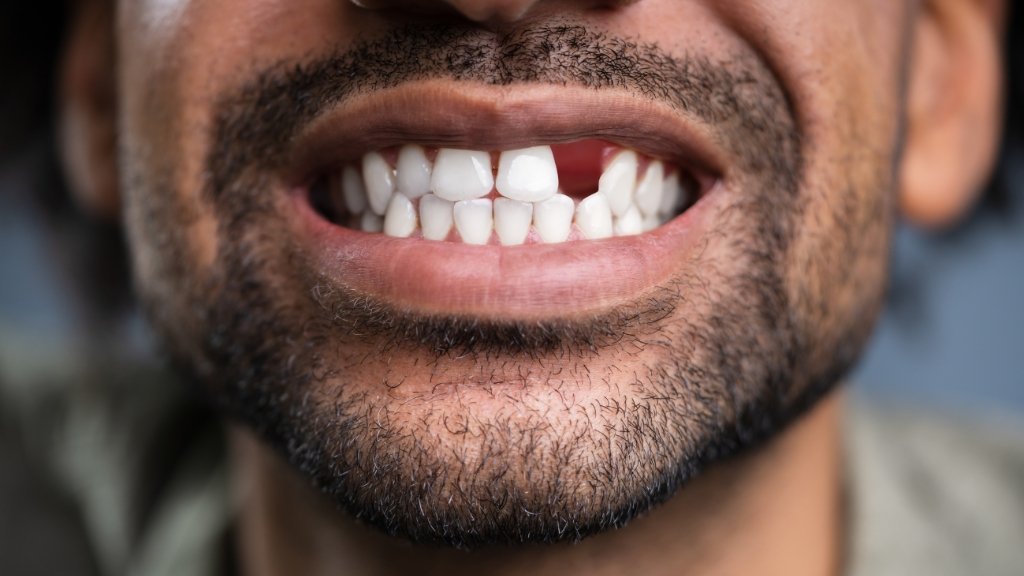
A missing tooth can impact your chewing, overall teeth alignment, and speech clarity. Replacing it helps to maintain the bite balance, prevents bone shrinkage, prevents future dental issues and restores your confidence quicker than you might think.
So, while losing a tooth can initially feel harmless, its impacts on health and lifestyle can be deeper. Let’s discuss 5 reasons that support replacing your tooth and address the concerns surrounding it.
Five Reasons To Replace A Missing Tooth
Do you chew more on one side now? Are food particles getting stuck more often? Do you feel slight jaw discomfort sometimes?
A missing tooth does more than change your smile. Left unreplaced, it can lead to gradual changes and even an emergency dental visit if the severity increases due to:
- Bone Shrinkage: The jawbone in that area slowly reduces because it no longer receives stimulation.
- Teeth Shifting: Nearby teeth begin drifting into the gap, affecting alignment.
- Bite Problems: Uneven pressure can lead to jaw strain or headaches.
- Gum Disease Risk: Food trapping increases bacterial growth.
- Speech Changes: Certain words may start sounding different.
Common Concerns Before You Replace Missing Teeth
“It Doesn’t Hurt… So Do I Really Need to Do Anything?”
Pain is not always the first sign of a dental issue. When a tooth is missing, the jawbone in that area slowly reduces in density because it no longer receives pressure from chewing.
You will not feel it happening instantly, but over time, this can:
- Change your facial structure slightly
- Weaken surrounding teeth
- Make future treatments more complex for you
So even if there is no discomfort, replacing a tooth is often a preventive dentistry decision rather than a reactive one.
“Will My Other Teeth Move Due To The Gap Of Missing Teeth?”
Yes, and this surprises many during their dental check up and clean visits. Teeth are supported by ligaments and bone, so when there is an empty space:
- Adjacent teeth start tilting inward
- Opposing teeth may over-erupt
- Bite pressure becomes uneven
This can lead to headaches, jaw tension, and a higher risk of cracking and chipping. Many patients first notice the problem when food starts getting stuck more frequently.
“Is It Going to Look Fake?”
Aesthetic anxiety is common, especially for front teeth. The good news from our dentist in St. Clair is that modern dentistry has advanced dramatically.
Today, high-quality crowns and implants are colour-matched to natural enamel, often making them nearly indistinguishable.
After experiencing the result, patients often admit their biggest regret was waiting too long, and not the usual anxiety over the treatment itself.
“Is It Too Late If I Lost the Tooth Years Ago?”
Not necessarily. Many adults replace teeth even after 5 to 10 years.
But it is important to note that in this case, while the process may involve additional steps (such as bone support procedures), options still exist.
The sooner you explore them, the simpler it tends to be.
“Will I Be Able to Eat Normally Again?”
A very practical concern (and an important one). Chewing efficiency can drop significantly even with a single molar missing. People often adapt without noticing by:
- Chewing on one side only
- Avoiding hard foods
- Eating slower
However, over the years, this adaptive mechanism might affect digestion and nutritional intake as well.
Replacing missing teeth restores balance and makes everyday eating effortless again.
What Are Your Missing Tooth Replacement Options?
If you ask Your Healthy Smile Dentists, the right option depends on age, gum health, bone strength, your lifestyle and your budget.
To give you a general overview, below is a list of cosmetic dentistry options that you may consider.
| Possible Options | What it does | When to consider it |
| Dental Implants | A titanium root analogue inserted into the jaw, topped with a crown. It replaces both the root and your tooth. | Best when you want a long-term, natural-appearing solution and preserve the jawbone. You must have good jawbone integrity. |
| Dentures | Removable partial or full prostheses that replace one or several teeth. | Good when surgery is unsuitable, for budget reasons, or when multiple teeth need replacing. It’s a quick fit and non-invasive. |
| Dental Crowns | Caps that restore the shape, strength and appearance of a worn out tooth. It is used on implant posts or to support bridges. | Use when a crown is needed as the visible part of an implant, or to support a fixed bridge replacing a missing tooth. |
Note: The choice largely depends on the outcome of your personalised consultation. In general, they are best discussed over your periodic dental check up and clean visits.
So… Should a Missing Tooth Be Replaced?
In most situations, it is indeed a wise decision because beyond looks, it is important for chewing ability, jaw health, speech clarity and long-term dental stability.
Moreover, beyond health, there is a human side to tooth loss. A restored smile often brings noticeable emotional relief in you.
That is why, when exploring missing tooth replacement options, personalised advice from an experienced dentist makes all the difference.
A Gentle, Personalised Approach Makes The Difference
Your Healthy Smile Dentists at 154 Bennett Road, St Clair, focus on what comforts you most, and what option suits you the best.
We offer gentle care and a choice of reliable dental solutions so you don’t have to miss out on living better. To discuss more, book your appointment today.
FAQs
Q1. What are the best options to replace a missing tooth?
Common options include dental implants, bridges and partial or full dentures. The best choice depends on bone health, budget and lifestyle.
Q2. Will a replacement tooth look natural?
Yes. Modern crowns, bridges and implants are colour-matched and shaped to blend with natural teeth.
Q3. Can one missing tooth really affect my other teeth?
It can. Adjacent teeth may tilt into the gap, and the opposing tooth can over-erupt, disturbing your bite balance.
Q4. Will a missing tooth affect my speech?
It can, especially if the gap is in the front. Certain sounds may become harder to pronounce clearly.
Q5. Can I eat normally with a missing molar?
You may adapt, but chewing efficiency often drops. Over time, this can influence food choices and digestion.
Q6. Can children or teenagers replace missing teeth?
It depends on age and jaw development. Dentists often recommend temporary solutions until growth is complete.
Q7. How long do replacement teeth last?
Implants can last decades with good care, bridges often 10–15 years, and dentures usually require periodic adjustments or replacement.
Reviewed By Dr. Lekha Menon