
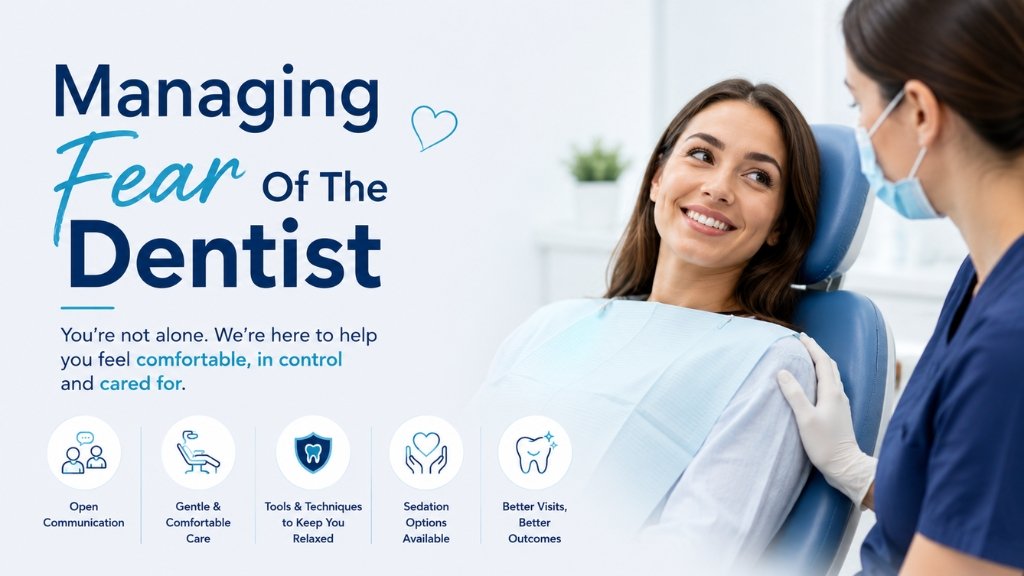
Fear of the dentist is one of the most commonly reported health-related anxieties in Australia. It is far more common than most patients realise and (good news) far more manageable than many expect. This guide explains what dentophobia is, what drives it, and what can help.
What Is Dentophobia and How Is It Different From Dental Anxiety?
Estimates suggest around one in six Australians experiences a meaningful fear of the dentist, making it one of the more common specific phobias in the country.
Surfacing as mild unease before a check-up, or leading to a search for an emergency dentist near me only once pain becomes unbearable, dental anxiety sits across a wide spectrum.
Dental anxiety is a broad term for worry or apprehension linked to dental visits, whereas dentophobia sits at the more severe end. In the latter, a lasting, often disproportionate fear is observed that leads patients to avoid care even when experiencing significant pain.
Simply, dental anxiety refers to general nervousness around dental care, while dentophobia describes a more severe, persistent fear.
What Triggers Fear of the Dentist?
Dental anxiety is most often rooted in a specific experience or a cluster of contributing factors.
Common triggers include a previous painful dental encounter (particularly from childhood), fear of needles or local anaesthetic injections, and a sense of lost control during treatment.
Embarrassment about the current state of one’s teeth is also significant, i.e., shame compounding dentophobia, is extremely common. Identifying your specific trigger gives your dental team something concrete to work around.
Can Dental Anxiety Harm Your Long-Term Oral Health?
Avoidance is one of the most significant and prolonged consequences of an untreated fear.
When patients avoid the dentist due to dentophobia, small issues go undetected. A minor cavity progresses to a deeper one. Early gum disease advances to periodontitis.
What could have been resolved in a single appointment now requires more complex treatment. And to no one’s surprise, the prospect of that reinforces dental anxiety further. This vicious cycle is what we usually help break at our St Clair dental clinic.
How Can You Prepare Before Your Appointment?
Open communication is one of the most effective tools for anxious patients.
Disclosing your dental anxiety when you book is the single most impactful first step. A well-equipped practice will pace the appointment accordingly, explain each step before beginning, and establish a pause signal so you remain in control throughout.
Your Healthy Smile Dentists suggest: Booking early in the morning reduces the hours of anticipation that heighten fear of the dentist during the day.
What Helps During the Appointment?
Small adjustments make a meaningful difference for patients managing dental anxiety.
It can include considering:
- Earphones with a familiar playlist or podcast provide an effective auditory buffer, reducing awareness of procedural sounds that commonly trigger anxiety.
- Requesting a step-by-step commentary from the dentist removes the element of surprise, which anxious patients consistently identify as the most distressing part of treatment.
- If needles are your trigger, discussing topical numbing gel before the local anaesthetic injection at our St Clair dental clinic is often done.
Also, exploring these FAQs has helped many patients before visiting us.
What Are Your Options for Severe Dentophobia?
Lastly, for patients with significant dental anxiety, sedation options provide a supported path to comfortable care.
- Nitrous oxide (happy gas): A light, relaxing effect that wears off quickly after the appointment.
- Oral sedation: A prescribed tablet taken beforehand produces a deeper calm while keeping you conscious.
- IV sedation or general anaesthesia: For severe dentophobia or complex procedures, typically via specialist referral.
Rest assured, Your Healthy Smile Dentists can advise on the most appropriate option based on your dental anxiety level and the treatment required.
Do Regular Visits Actually Reduce Fear of the Dentist Over Time?
From our decades of experience, we were able to conclude that six-monthly check-ups often kept treatment minimal and predictable for our patients.
When each visit involved little more than a clean, brief examination, the link between the dental chair and distressing treatment began to weaken for even the most anxious visitors.
Also, patients who maintain routine care consistently report that their fear of the dentist diminishes. This is not from forcing through anxiety, but because a growing record of comforting appointments replaces the earlier apprehensions.
Book an Appointment at Our St Clair Dental Clinic
If fear of the dentist has been keeping you up despite the discomfort, Your Healthy Smile Dentists are here to help. We will ensure that your treatment is completed comfortably, at your convenience, and cost-effectively, leaving you with a worry-free smile.
We often hear from our patients how the exaggerated fear came down to nothing but just a mild pressure and perfectly manageable triggers.
So, if you are waiting on any of the treatments listed here, call (02) 9670 6991 or search for an emergency dentist near me for a priority consultation.
FAQs
Q1. Is dentophobia the same as dental anxiety?
Not exactly. Dental anxiety covers general nervousness, while dentophobia describes a severe, persistent fear that leads to significant avoidance. Both are manageable with gentle support.
Q2. Do I need to explain my fear in detail?
No. Simply letting our team know you are anxious is sufficient. Our practice is experienced in adjusting its approach for nervous patients without requiring lengthy explanation.
Q3. Can I request sedation for a routine check-up?
Sedation is generally matched to the treatment required. Discuss your dental anxiety openly, and our dentist will advise on the most appropriate comfort option.
Q4. What if I need an emergency dentist but anxiety is stopping me?
Dental pain is almost always more distressing than the treatment needed to resolve it. Search for an emergency dentist near me, call ahead, and our team will prepare the appointment around your needs.
Q5. How long does it take to overcome fear of the dentist?
Many patients notice meaningful improvement after two or three positive visits. For more entrenched dentophobia, cognitive behavioural therapy (CBT) alongside routine care can make a noticeable difference.
Reviewed By Dr. Lekha Menon