
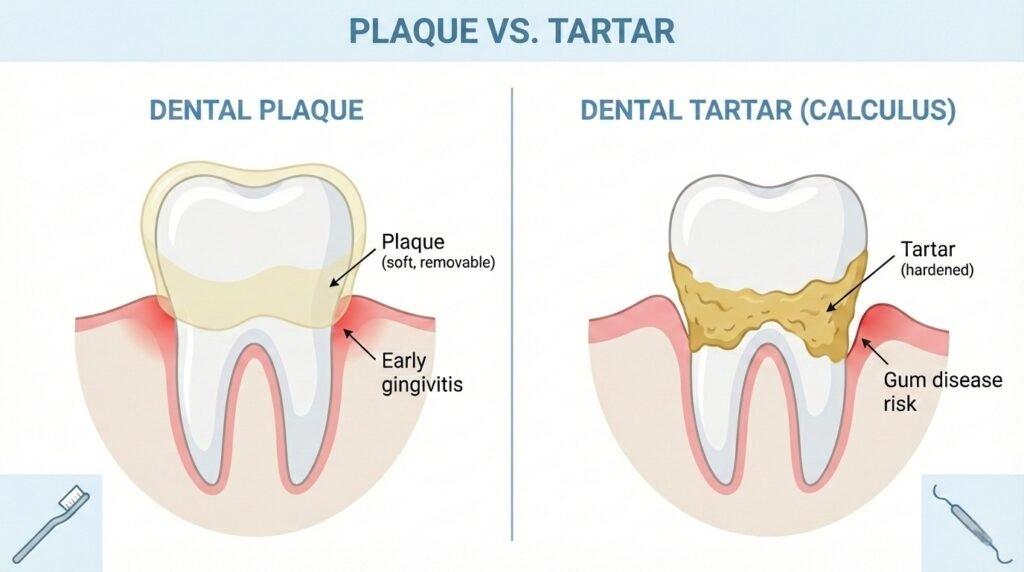
Plaque and tartar are often spoken about together, yet they are two very different stages of the same oral health process. One is soft, manageable and reversible. The other is hardened, stubborn and often responsible for gum disease, decay and what patients sometimes describe as a ‘hole in gum’. In this article, we will help you learn how both can be treated, how to tell them apart, and how you can prevent their progression.
Understanding Dental Plaque
Dental plaque is a soft, sticky bacterial biofilm that is found to form naturally on your teeth throughout the day. It develops when bacteria in your mouth mix with the sugars and starches in your food.
These bacteria include Streptococcus mutans, among others, which are known to cause tooth decay and various dental issues. Also, since plaque is usually colourless, many don’t realise they have it until symptoms appear.
What does plaque lead to?
- Plaque bacteria produce acids that weaken enamel.
- It irritates the gums, leading to gingivitis.
- Persistent plaque increases the risk of decay and gum recession.
At this stage, the damage is still reversible, which is why we often encourage plaque control measures.
How plaque is treated
Plaque can usually be managed with good daily habits and routine dental care like:
- Brushing twice a day with fluoride toothpaste.
- Cleaning between teeth with floss or interdental brushes.
- Regular dental check-up and clean sessions.
- Reducing sugary snacks and drinks.
Your dentist will often check for plaque build-up during routine visits and guide you on better cleaning techniques if needed.
What to avoid when plaque is present
If plaque accumulation has been detected, you must avoid:
- Frequent intake of fermentable carbohydrates.
- Ineffective brushing techniques.
- Skipping interdental cleaning.
- Ignoring early bleeding, which signals inflammation.
Our dentist in St Clair often points out that preventive dentistry works best when plaque is disrupted before mineralisation begins.
Understanding Tartar
Once plaque becomes tartar, it cannot be removed at home.
Tartar, also called calculus, forms when plaque is not removed and hardens. Minerals in saliva cause plaque to turn into a rough, crusty deposit that sticks firmly to teeth and along the gumline.
Why is it more serious? It’s because Tartar is a key cause of periodontitis, a more severe form of gum disease.
What does tartar lead to?
- It traps more bacteria around the gums.
- Gums pull away from teeth, forming pockets.
- Gum disease can develop and worsen.
- Advanced cases may lead to infection or a visible hole in gum.
How tartar is treated
Tartar must be removed by a dental professional using specialised tools:
- Scaling and cleaning above and below the gums.
- Deep cleaning for areas with gum pockets.
- Laser dentistry, where suitable, to reduce bacteria.
However, if tartar has already caused damage, treatment may also include:
- Root canal treatment for infected teeth.
- Dental crowns or inlays and onlays to restore strength.
- Dental implants or dentures if a tooth cannot be saved.
What to avoid once tartar has formed
If tartar is present, avoid:
- Attempting self-removal by scraping it damages enamel and gums.
- Delaying professional periodontal care.
- Smoking, which impairs gingival blood flow.
- Assuming chronic bleeding is harmless.
In this case, early intervention can significantly improve periodontal outcomes.
How plaque and tartar affect your gums differently
Plaque typically causes reversible gingivitis, characterised by erythema, oedema and bleeding on probing. Tartar, however, leads to irreversible periodontal changes, including:
- Gingival recession
- Loss of periodontal ligament attachment
- Vertical and horizontal bone defects
This explains why patients may suddenly notice gaps, sensitivity or a hole in gum once tartar is established.
It is also important to note that some can need extra support in the form of mouthguards or nylon splints for teeth grinding, regular cleanups, and deeper evaluation of dry mouth.
Prevent Advancement of an Avoidable Dental Problem
With gentle preventive dentistry and professional cleanings, most people keep healthy gums and teeth for life. Plaque and tartar can be promptly addressed once you compare Plaque vs. Tartar and avail expert treatment for the right condition.
So, if you notice bleeding, discomfort or a suspected hole in gum, Your Healthy Smile Dentists can help you avoid the discomfort and tooth loss it can cause. Contact us at (02) 9670 6991 or book your appointment at your preferred slot.
FAQs
Q1. Can plaque turn into tartar overnight?
Plaque can begin to harden within 24 to 72 hours if not removed, especially along the gumline.
Q2. Is gum disease caused only by poor brushing?
No. Your genetics, smoking habits, medical conditions and dry mouth can also tend to increase the risk factor.
Q3. Can brushing remove tartar?
No. Once plaque becomes tartar, only a dental professional can remove it safely.
Q4. What does a ‘hole in gum’ usually mean?
It often refers to gum recession, a deep gum pocket or an abscess caused by advanced gum disease.
Q5. Can mouthwash remove plaque?
Mouthwash does help you reduce bacteria, but it cannot replace brushing and flossing entirely.
Q6. Does tartar come back after cleaning?
Yes, if plaque control at home is poor, tartar will gradually reform.
Q7. Can plaque and tartar affect my overall health?
Yes. Gum disease has been linked to heart disease, diabetes and inflammation.
Reviewed By Dr. Lekha Menon