
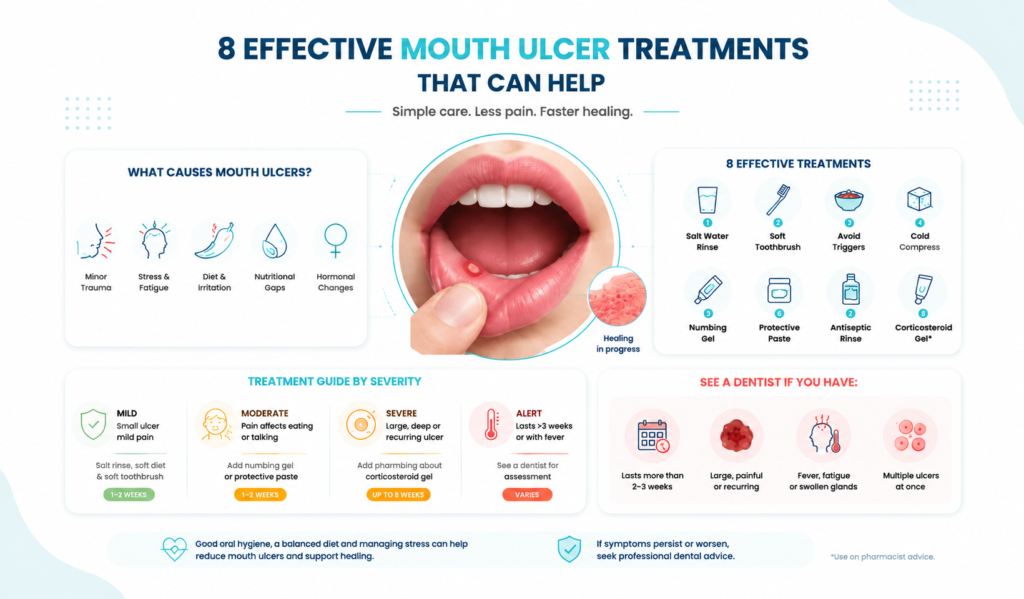
Mouth ulcers are shallow red or white sores that cause noticeable discomfort while chewing or speaking. A targeted mouth ulcer treatment focuses on protecting raw tissue, reducing inflammation and mitigating pain while healing takes place. Known to make even a cup of coffee or tea into an excruciating experience, these small, painful sores are common and can be addressed with proper care.
This guide covers how to get rid of a mouth ulcer at home, when a pharmacy product might help, and when it is worth booking in with a dentist.
On this page:
- What Causes a Mouth Ulcer?
- Can Mouth Ulcers Heal Naturally
- 8 Effective Mouth Ulcer Treatments That Can Help
- Reviewing Mouth Ulcer Treatment by Severity
- When a Mouth Ulcer Needs a Dentist
- FAQs
What Causes a Mouth Ulcer?
The exact trigger behind a mouth ulcer is not always clear, but a few common causes tend to come up again and again.
- Minor trauma: Biting your cheek, brushing too hard, or a sharp edge on a tooth or brace can injure the soft tissue.
- Stress and fatigue: Periods of high stress may make ulcers more likely to appear.
- Diet and irritation: Acidic, spicy, or very hot food can irritate the lining of your mouth.
- Hormonal changes: Some people notice ulcers appear more often around certain hormonal shifts, though this pattern can vary widely between individuals.
- Nutritional gaps: A shortage of vitamin B12, iron, or folate has been linked to recurring ulcers.
Can Mouth Ulcers Heal Naturally?
When the oral lining breaks down, a soft yellowish-grey layer of fibrin quickly forms over the exposed tissue. As immune cells gather around this protective shield, they create the characteristic red ring surrounding the sore.
With the raw tissue protected, the body shifts into active reconstruction as connective cells produce fresh collagen. Meanwhile, new blood vessels regrow to supply essential nutrients that support steady tissue repair.
Because the inner lining of the mouth replaces its cells every five to eight days, recovery happens relatively faster than on external skin and without leaving scars.
8 Effective Mouth Ulcer Treatments That Can Help
For a standard, minor ulcer, home care is usually the first sensible step, with pharmacy options available if that alone is not enough.
- Rinse with warm salt water. Mix a teaspoon of salt into a cup of warm water and swish for around 30 seconds, a few times a day. This can help you keep the area clean.
- Switch to a soft-bristled toothbrush. This can reduce further irritation while the ulcer heals.
- Avoid known triggers. Spicy, acidic, salty, or crunchy foods may aggravate the sore. Soft foods like yoghurt or mashed vegetables tend to be gentler.
- Try a cold compress. Holding something cold against the cheek near the ulcer might ease pain in the short term.
- Apply a topical anaesthetic gel. Available from any pharmacy, this may numb the area for short-term relief around mealtimes.
- Use a protective paste. These can form a barrier over the ulcer, shielding it from friction while it heals.
- Try an antiseptic or anti-inflammatory mouth rinse. This might help reduce the risk of secondary infection, particularly if more than one ulcer is present at a time.
- Ask about a corticosteroid gel. Available on pharmacist advice, this may help reduce inflammation for more stubborn or recurring ulcers.
Good general oral hygiene, of the kind covered under our general family dentistry services, can also make you less prone to repeat irritation from sharp or misaligned teeth.
What Dr. Lekha Menon notes: Some products carry age restrictions. Always check with your pharmacist before considering them, especially for children.
Reviewing Mouth Ulcer Treatment by Severity
| Situation | Suggested First Step | Timeframe |
| Small, single ulcer with mild pain | Salt water rinse, soft diet and a soft toothbrush | 1 to 2 weeks |
| Painful ulcer affecting eating or talking | Add a pharmacy numbing gel or protective paste | 1 to 2 weeks |
| Large, deep or recurring ulcer | Ask a pharmacist about a corticosteroid gel | Up to 6 weeks |
| Lasts beyond 3 weeks or comes with fever | See a dentist for an assessment | Varies by cause |
When a Mouth Ulcer Needs a Dentist
While most mouth ulcers settle naturally and with accessible remedies, specific warning signs indicate that professional clinical evaluation is necessary.
- The ulcer has lasted longer than two to three weeks.
- It is unusually large, painful, or keeps coming back.
- Fever, fatigue, or swollen glands appear alongside it.
- Multiple ulcers appear at once (particularly for anyone on immunosuppressant medication).
If you’re looking for answers on how to get rid of a mouth ulcer, you can
FAQs
1. How long does a mouth ulcer usually take to heal?
Most minor ulcers heal within one to two weeks. Larger or deeper ulcers may take up to six weeks, and these are worth having checked by a dentist.
2. Can a mouth ulcer be a sign of something more serious?
Occasionally, yes. Ulcers linked to autoimmune conditions, gastrointestinal disease, or other underlying issues can resemble an everyday ulcer, which is why a persistent one deserves a proper look, as noted by the Australian Dental Association.
3. Is it safe to use anaesthetic gels like Bonjela on children?
Some anaesthetic gels carry age restrictions because of their ingredients, so it is best to check the packaging or ask your pharmacist before giving any product to a child.
4. What foods should I avoid with a mouth ulcer?
Acidic, spicy, salty, and crunchy foods tend to make ulcers sting more. Softer, cooler foods are generally easier to manage while healing.
5. Can mouth ulcers be prevented?
Not always, since the exact cause is often unclear. That said, a soft-bristled toothbrush, a balanced diet, and managing stress where possible may help reduce how often they appear. Regular dental check-ups can also pick up sharp edges or ill-fitting appliances before they become a recurring irritant.nd dissolves protective enamel, particularly on the inner surfaces of upper teeth, exposing sensitive dentine to cold items.

Dr. Lekha Menon
Dr. Lekha Menon is the Principal Dentist at Your Healthy Smile. She graduated from dental school in 1998 and has over 25 years of experience, serving the St Clair community since 2007. She provides personalised dental care with expertise in general and cosmetic dentistry, Invisalign®, orthodontics, dental implants, crowns, veneers, dentures, and root canal therapy.