
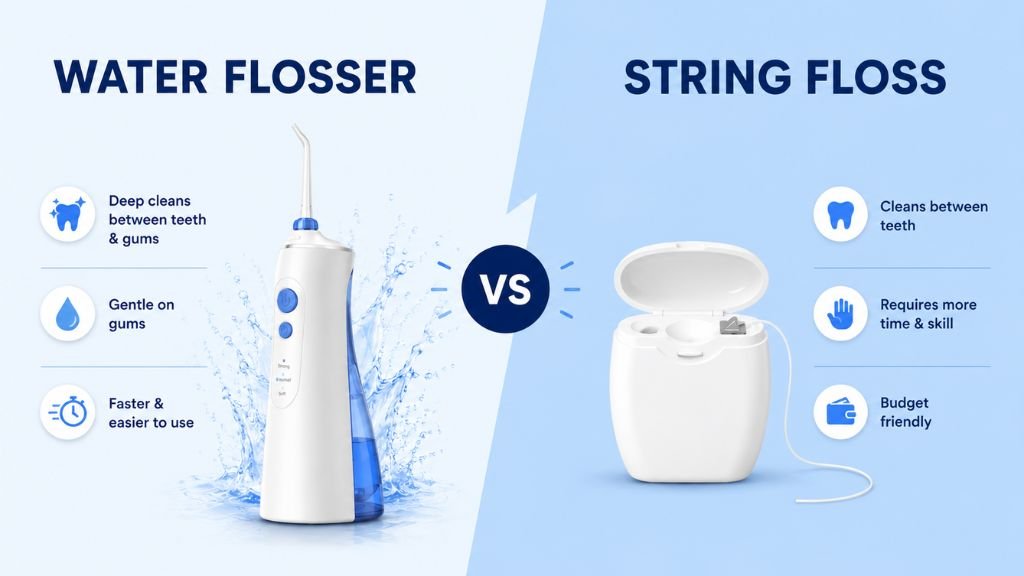
As we discuss the effectiveness of water flosser vs string floss, it is important to realise that neither is strictly superior as they both serve different roles. While water flossers are more effective at improving gum health and reducing bleeding, string floss is superior for scraping plaque off teeth.
Is Flossing Really Necessary?
While a toothbrush cleans the visible surface of our teeth, it cannot reach the tight spaces between them. This is where dental biofilm thrives, often leading to gingivitis and eventually tooth decay.
To address it, the effectiveness of water flosser vs string floss is often compared.
1. The Basics of String Floss
String floss has been the standard recommendation under preventive dentistry measures. It involves using a thin piece of nylon or plastic cord to physically scrape the surfaces of your teeth.
Effectiveness of String Floss
The primary advantage of string floss is the mechanical friction it provides.
- By wrapping the floss in a C shape around the tooth and moving it up and down, you can physically dislodge sticky biofilm and plaque.
- It is particularly effective for people with very tight gaps where other tools might struggle to enter.
Limitations of String Floss
The effectiveness of string floss depends entirely on the technique of the user.
- If the floss is not moved beneath the gum line or if the C shape method is ignored, much of the plaque remains behind.
Additionally, individuals with limited dexterity or those wearing braces often find string floss much difficult to navigate.
2. The Basics of the Water Flosser
A water flosser, also known as an oral irrigator, is a handheld device that directs a pulsating stream of water into the spaces between the teeth and under the gum line.
Effectiveness of Water Flossers
Water flossers use hydrokinetic energy to flush out food particles and bacteria.
- The pulsating action creates a cycle of compression and decompression that reaches deep into periodontal pockets.
- This is especially beneficial for reducing inflammation and bleeding of the gums.
Limitations of Water Flossers
While excellent at flushing out debris, there is a drawback for some in this preventive dentistry method.
- A water flosser does not provide the same level of scraping force as string floss.
Also, it requires a power source and a water reservoir, making it less portable than a small container of string.
3. Water Flosser vs String Floss: Who Should Choose Which?
When reviewing the medical data and patient feedback, Your Healthy Smile Dentists observe that the results demonstrate unique strengths as well.
| Aspect | String Floss | Water Flosser |
| Plaque Removal | Superior for scraping sticky biofilm | Excellent for flushing loose debris |
| Gum Health | Effective if used with perfect technique | Up to 50 percent more effective at reducing bleeding |
| Ease of Use | Requires high manual dexterity | Very easy and comfortable to use |
| Suitability | Difficult to use with braces | The preferred choice for braces and implants |
After referring to the table, it is clear that considering these tools depends on the individual preventive dentistry needs. However, their inclusion is largely beneficial to most individuals.
4. Before and After Water Flossing
Introducing oral irrigation into a daily routine typically leads to visible physiological changes within two to four weeks.
Before Water Flossing
- Biofilm Stagnation: Plaque can remain trapped in the interproximal spaces, hardening over time into calculus or tartar.
- Erythema: Gums can appear bright red and swollen due to increased blood flow to the site of infection.
- Edema: Your gum tissue loses its firm texture and appears puffy due to swelling.
- Provoked Bleeding: Gums bleed easily when touched by a toothbrush or traditional floss.
After Consistent Water Flossing
- Tissue Stippling: Healthy gums often display a textured appearance, indicating firm attachment.
- Reduction in Pocket Depth: As inflammation subsides, the gingival tissue can tighten around the tooth, reducing the depth of the sulcus.
- Cessation of Bleeding: The removal of subgingival pathogens may allow the immune system to settle, resulting in gums that no longer bleed during cleaning.
- Improved Microcirculation: The pulsating action stimulates blood flow and promotes faster healing of the soft tissues.
Which Flossing Method Should You Choose?
Your Healthy Smile Dentists believe that the decision between these preventive dentistry tools should be based on individual dental needs and the suitability.
You May Opt for String Floss if:
- You have very tight tooth contacts where water might not easily penetrate.
- You have high manual dexterity and have mastered the C-shape technique.
- You require a highly portable, non-electronic option for travel.
You May Opt for a Water Flosser if:
- You have orthodontic appliances such as braces, dental implants, or permanent bridges.
- You have a history of gingivitis or periodontitis.
- You have limited hand mobility due to conditions such as arthritis.
Let the Experts Help You Decide Better
While deciding between a water flosser and string floss is a great step for preventive dentistry, Your Healthy Smile Dentists in St Clair can help you decide more informatively.
With dental check up and clean sessions, we can help you diagnose the root cause of your oral health issues and help to answer many such questions.
If you found this comparison helpful, learn more about its complementary benefit on your daily brushing.
FAQs
Q1. Can I put mouthwash in the water flosser reservoir?
Yes, many models allow a 1:1 ratio of water to mouthwash. However, you must flush the unit with plain water afterwards to prevent internal damage. Always consult your dentist before adding medicated rinses to your routine.
Q2. Is it normal for gums to bleed when I first start water flossing?
Mild bleeding can occur if you have existing gingivitis. This should typically subside within two weeks as your gum health improves. If bleeding persists, consult Your Healthy Smile Dentists by searching for the best dentist near me.
Q3. Is warm water better than cold water for flossing?
Warm water is often preferred, especially for individuals with dentinal hypersensitivity due to exposed tooth roots or thin enamel. It provides a more comfortable experience and may help loosen food particles more effectively.
Q4. How often should I replace the flosser tips?
For optimal performance, standard jet tips should be replaced every six months. If you use a specialised tip, such as a toothbrush or orthodontic tip, these should be replaced every three months.
Q5. Is water flossing better for the environment than string floss?
This is a complex trade-off. While string floss contributes to microplastic waste, water flossers are electronic devices. Choosing a high-quality, long-lasting device is the best way to minimise your environmental footprint.
Reviewed By Dr. Lekha Menon