
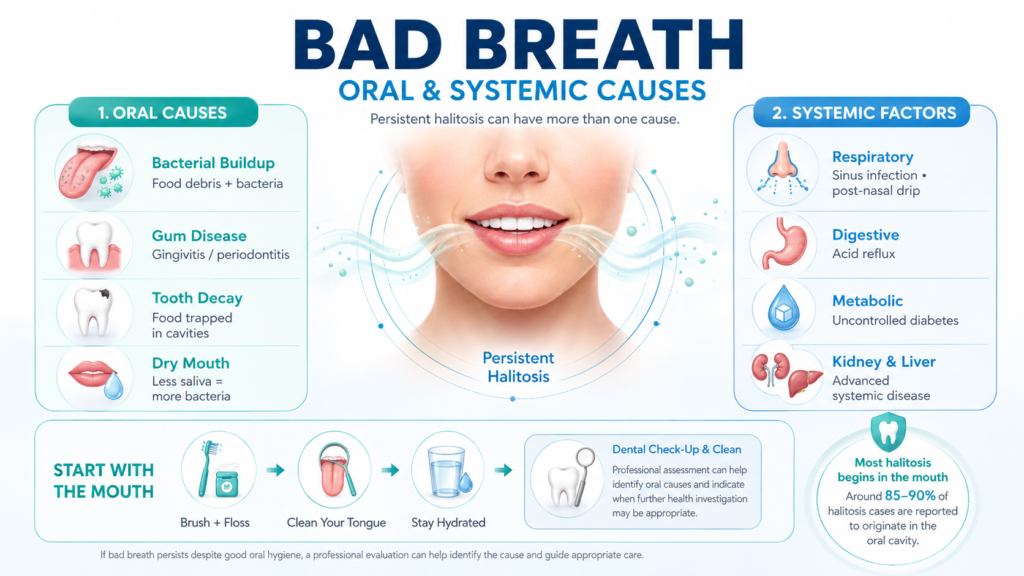
Persistent bad breath, medically known as halitosis, is a common issue that affects people of all ages. While occasional instances due to dehydration or after consuming garlic is common, persistent odour is often a signal that something deeper requires attention.
Understanding the relationship between oral hygiene, systemic conditions, and overall health is the first step towards restoring confidence and wellbeing.
Understanding the Primary Causes of Bad Breath
1. Oral Factors
- Bacterial Buildup: The mouth contains hundreds of types of bacteria. When food particles remain trapped between teeth or on the tongue, bacteria break down these proteins and release volatile sulphur compounds. These compounds create a foul smell.
- Gum Disease: Advanced gum conditions such as gingivitis and periodontitis create deep pockets around the roots of teeth. These pockets become ideal environments for harmful bacteria to thrive, leading to chronic odour.
- Tooth Decay: Cavities provide microscopic crevices where food debris accumulates, making thorough cleaning with a standard toothbrush difficult.
- Dry Mouth: Saliva acts as a natural cleaning agent by washing away bacterial plaque and neutralising acids. A reduction in saliva production, whether caused by medications, mouth breathing, or dehydration, allows odour-producing bacteria to flourish.
2. Systemic and Internal Health Factors
When oral causes are ruled out, persistent breath issues may indicate an underlying medical condition:
- Respiratory Infections: Chronic sinus infections, tonsillitis, post-nasal drip, or lung infections can release unpleasant fluids into the back of the throat.
- Gastrointestinal Issues: Gastro-oesophageal reflux disease, commonly known as acid reflux, allows stomach acids and partially digested food to travel back up into the oesophagus, resulting in a sour smell.
- Metabolic Conditions: Uncontrolled diabetes can cause a state known as ketoacidosis, which produces a distinct fruity or sweet breath odour.
- Kidney and Liver Health: Advanced renal failure can cause breath to smell like ammonia or fish due to waste products building up in the bloodstream. Similarly, severe liver dysfunction can produce a characteristic musty smell.
The Role of Preventive Dentistry
To address bad breath effectively, relying solely on temporary fixes such as mints or cosmetic mouthwashes is not enough. Masking the smell does not eliminate the root bacterial or systemic issue. This is where preventive dentistry plays a critical role.
Preventive dentistry focuses on maintaining optimal oral health through proactive routines, early diagnosis, and patient education.
By stopping plaque accumulation and identifying early signs of gum inflammation, preventive care ensures that minor oral health concerns do not escalate into major problems.
Why a Regular Dental Check Up and Clean Matters
Even with diligent daily brushing, plaque can harden into tartar over time. Tartar cannot be removed with a standard toothbrush or dental floss; it requires professional instruments.
Scheduling a routine dental check-up and clean at Your Healthy Smile Dentists offers several key advantages:
- Thorough Calculus Removal: Your Healthy Smile Dentists use specialised equipment to gently remove tartar buildup from above and below the gumline.
- Comprehensive Examination: We assess the condition of gums, teeth, tongue and oral tissues to identify hidden bacteria traps or signs of dry mouth.
- Systemic Health Screening: If a patient maintains excellent oral health yet continues to experience halitosis, we can provide appropriate measures for further health checks.
Daily Habits for Fresh Breath
Along with routine professional visits, establishing an effective home care routine is essential for long-term fresh breath:
- Brush twice for at least two minutes using a soft-bristled toothbrush and fluoride toothpaste.
- Floss every day to remove food particles and bacterial plaque where toothbrush bristles cannot reach.
- Clean your tongue gently as bacteria frequently collect on the back surface of the tongue.
- Drink plenty of water throughout the day to support healthy saliva production.
Lastly, if you wear dentures, retainers, or nylon splints, ensure they are sanitised appropriately every day.
Schedule Your Dental Check Up Today
Studies show that approximately 85 to 90% of halitosis cases originate directly inside the mouth. That is why uncovering the causes of bad breath involves examining both the oral cavity and broader bodily systems.
Do not let persistent bad breath affect your confidence or hide an underlying health issue. Contact Your Healthy Smile Dentists at 154 Bennett Rd, St. Clair.
We can help you take the first step towards a healthier, more confident smile with a comprehensive dental check up and clean.
FAQs
1. How do sinus infections and post-nasal drip cause foul mouth odour?
Sinus infections cause excess mucus production. When this infected mucus drips down the back of the throat, a process known as post-nasal drip, it provides a protein-rich food source for anaerobic bacteria. These bacteria digest the proteins in the mucus and release volatile sulphur compounds, creating a noticeable odour.
2. What does metallic breath odour indicate regarding systemic health?
A metallic taste or smell on the breath can stem from several sources. In oral health, it often points to bleeding gums caused by periodontitis, as blood contains iron. Systemically, a metallic odour can indicate vitamin deficiencies, kidney disease, liver problems, or side effects from specific prescription medications.
3. What role do tonsil stones play in creating severe throat odour?
Tonsil stones, or tonsilloliths, form when food particles, dead cells, and mucus become trapped in the small crevices of the tonsils and calcify over time. Anaerobic bacteria feed on this trapped debris, producing highly concentrated volatile sulphur compounds that generate an intense, localised odour.
4. How does dry mouth accelerate bacterial growth and bad odour?
Saliva contains enzymes and antibodies that continually cleanse the oral cavity, neutralise bacterial acids, and wash away food particles. When saliva flow decreases due to dehydration, mouth breathing, or medications, anaerobic bacteria flourish unimpeded, leading to rapid accumulation of odour-producing compounds.
5. Can hormonal changes during pregnancy cause bad breath?
Hormonal fluctuations during pregnancy increase progesterone and oestrogen levels, which can exaggerate the inflammatory response of the gums to plaque. This increases the risk of pregnancy gingivitis and bleeding gums. Additionally, morning sickness and dehydration during pregnancy contribute to oral acidity and reduced saliva, heightening bad breath risks.
Reviewed By Dr. Lekha Menon