
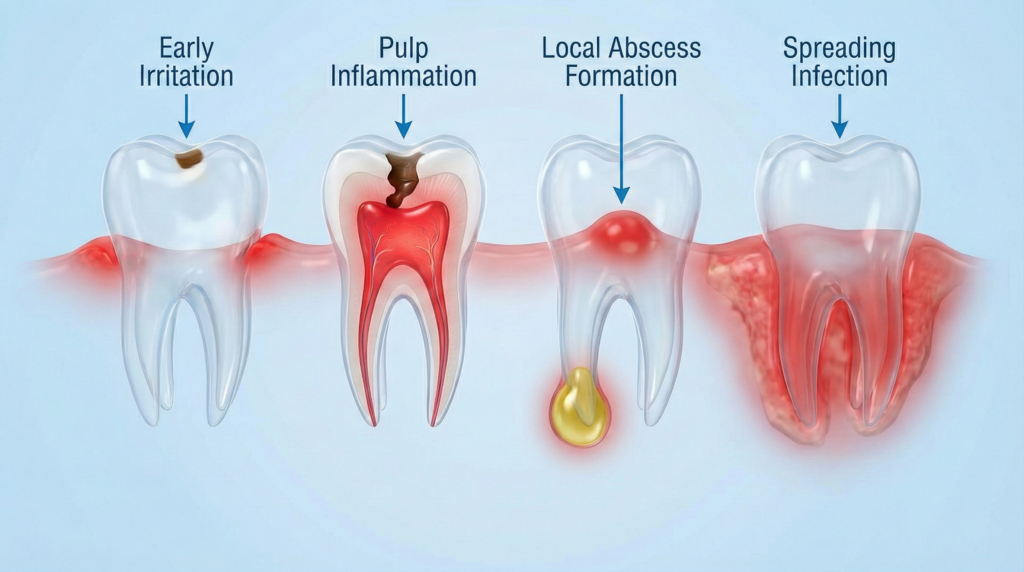
A tooth abscess begins with mild sensitivity and early gum changes, progressing to deeper pulp irritation and the formation of a painful lump. In some cases, it leads to spreading into the jaw as well. Recognising progression and detrimental aspects of tooth abscess stages helps individuals to seek timely care.
Know what these tooth abscess stages are, why a minor hole in gum might raise an alarm, and how dentists can help you.
Stage 1: Early Irritation
This is when decay or gum changes begin to appear
The earliest of the tooth abscess stages is usually subtle. Decay may begin under plaque, or you may notice gum tenderness linked to the receding gums stages, especially if you brush aggressively or have a history of gum concerns.
Symptoms often include:
- Mild tooth sensitivity
- A slight ache after sweets
- Occasional bleeding when brushing
- A small, tender spot that may resemble a hole in gum beginning to form
Australians commonly experience early gum recession due to lifestyle factors such as smoking, high soft-drink intake or irregular dental visits. At this point, treatment is simple and minimally invasive. Since early treatment is simple, a small filling or a deep clean can help arrest the progression.
Stage 2: Pulp Inflammation
This is when bacteria reach the inner tooth
If early signs are ignored, bacteria can spread deeper into the tooth and irritate the pulp. This is the second of the tooth abscess stages, and it marks the point where symptoms become more noticeable and often more distressing.
What you may feel:
- Sharp, throbbing pain that may radiate to the jaw or ear
- Sensitivity to hot and cold
- A heavy pressure sensation when biting
- A deeper ache that wakes you at night
The good news? At this stage, treatment such as root-canal therapy usually provides quick relief. Most patients feel noticeably better once the pressure inside the tooth is relieved.
Stage 3: Local Abscess Formation
This is when a noticeable lump develops
If you’ve spotted a swollen lump or felt sudden tenderness, you might now be entering one of the more visible tooth abscess stages. At this point, the body forms a pus pocket to contain the infection, causing what many people describe as a “gum boil.”
It may look and feel dramatic, but a contained abscess is still manageable with prompt care.
You may notice:
- A painful bump on the gum
- A bad taste or sudden fluid release
- Swelling near the tooth
- A visible hole in gum where pus may drain
While this stage seems frightening, it is highly treatable. Most patients feel immediate relief once the abscess is drained, cleaned and treated quickly with antibiotics.
Stage 4: Spreading Infection
This is when your face or jaw begins to swell
Have you woken up with swelling on one side of your face? Or felt warm, run-down, or feverish? This advanced stage of the tooth abscess stages is less common but more serious if ignored. At this point, the infection can spread into nearby tissues, cheek spaces or the jawbone. However, worsening in such cases is still preventable.
Keep an eye on:
- Firm swelling under the jaw
- Pain that feels “deep inside” the face
- Difficulty swallowing or opening the mouth
The ADA advises to seek urgent care if swelling affects your breathing or swallowing. Your Healthy Smile Dentists can prevent this progression by treating issues before they escalate.
Resolution and Recovery
Given the severity and advancement of tooth abscesses, your dentist will first address the infection as a priority. Once the infection settles, a long-term solution may involve saving the tooth with a root canal, restoring it with a crown, or removing it if it’s too damaged to preserve.
Through your treatment, you’ll notice:
- The disappearance of the gum lump
- Closure of the small hole in gum
- Relief from pressure and pain
- Ongoing monitoring of gum pockets
It is important to note that in some cases, a small draining pathway (sometimes mistaken for a hole in gum) may exist temporarily while the tissue heals. Also, missing teeth can be replaced with implants or bridges, helping you regain comfort and confidence.
Rest assured, with Your Healthy Smile Dentists in St Clair, tooth abscess stages and their symptoms are rarely about loss, but more about restoring stability and preventing their recurrence.
Tooth Abscess Stages vs Gum Abscess Stages and What’s the Difference?
A tooth abscess starts inside the tooth while a gum abscess begins in the gum pocket, usually related to gum disease or trapped debris. Also, a gum abscess tends to develop quickly, feel soft or fluctuant and develops as a tiny hole in gum that might leak fluid.
As an individual, healthy habits break the cycle before an abscess forms. However, if they do develop, managing them through dental professionals is the key to your overall wellbeing.
As Your Trusted Dentist in St Clair, We’re Here to Help
Dental infections can feel confusing yet stress-inducing, but they’re also one of the most treatable oral conditions.
In such cases, visiting Your Healthy Smile Dentists every 6 months ensures best outcomes through early intervention. This relieves you from pain, severe effects, and also the expenses associated with it.
Speak with our dentists to know whether that hole in gum of yours is linked to tooth abscess or not. Because if you’re dealing with tooth abscess stages, we’re here to support you with clarity and care.
FAQs
Q1. What are the first signs of a tooth abscess?
Early signs include mild sensitivity, gum tenderness, small swelling, or a tiny hole in gum caused by trapped bacteria.
Q2. Does a tooth abscess sometimes cause ear or jaw pain?
Inflamed nerves refer to pain in nearby areas, making abscesses feel like earaches or jaw pressure.
Q3. How do tooth abscess stages typically progress?
They progress from early irritation to pulp inflammation, abscess formation, spreading infection, and finally healing or restoration after treatment.
Q4. How can I tell a tooth abscess from a gum abscess?
A tooth abscess starts inside the tooth; a gum abscess begins in the gum pocket and often links with receding gums stages.
Q5. Does a hole in the gum always mean infection?
Often yes. A hole in gum can indicate drainage from an abscess or advanced gum disease requiring prompt assessment.
Reviewed By Dr. Lekha Menon