
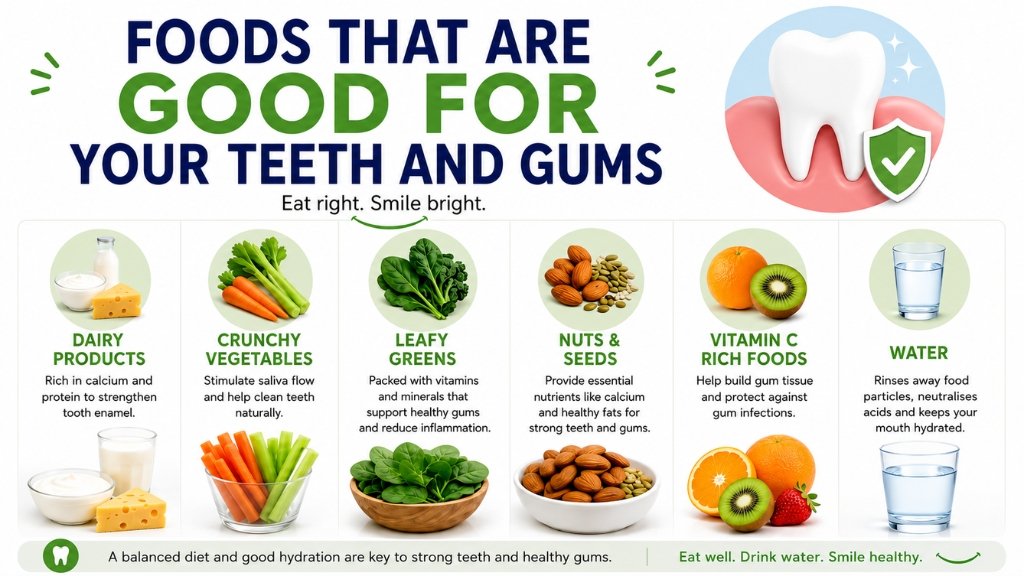
A holistic oral health plan includes nutrient-dense foods that are good for your teeth and gums. This includes cheese, yoghurt, leafy greens, crunchy vegetables and surprisingly, water. Together, they help protect your oral health by neutralising harmful acids, stimulating saliva generation, shielding your enamel from decay and strengthening your gums against infections.
To know more, let’s understand what foods you must include to improve your oral health and how certain conditions influence this choice too.
Quick Takeaways From Our Article
- Dairy products like cheese and plain yoghurt provide calcium to rebuild tooth enamel.
- Crunchy vegetables stimulate saliva flow, which naturally cleans food particles away.
- Leafy greens deliver vitamins that reduce gum inflammation and bleeding.
- Nuts are your nutritional powerhouse for a reason, but be careful with the hard ones!
- Water remains the ultimate tool to rinse away acid after eating.
Foods That Are Good For Your Teeth
To keep the mouth healthy, the diet should focus on specific nutrients that rebuild enamel and protect gum tissue.
Dairy Products
The outer protective layer of your tooth, enamel, faces constant acid attacks from oral bacteria. When you eat, these acids cause demineralisation, stripping essential minerals from your teeth. To reverse this, your body requires specific nutrients to trigger remineralisation, which is the natural restoration of minerals to the enamel.
- Cheese contains a unique protein called casein, which joins with calcium and phosphate to create a protective barrier over the teeth. Also, it raises the pH in the mouth, reducing the risk of tooth decay.
- Rich in calcium and protein, yogurt supports overall bone strength. Notably, the beneficial bacteria found in yogurt can also crowd out harmful cavity-causing bacteria.
Also, if you live with lactose intolerance or a dairy allergy, fortified plant milks, tofu, and broccoli offer calcium that supports bone and tooth structure without causing digestive distress.
High-Fibre Fruits and Vegetables
Foods that require significant chewing act as a scrubber for the teeth while stimulating a steady flow of saliva.
- Celery and Carrots: Chewing these crunchy vegetables produces large amounts of saliva, which washes away food particles and neutralises harmful acids. Celery also acts as a natural floss due to its fibrous texture.
- Apples: Although apples contain natural sugars, the high fibre content stimulates the gums and cleans the surfaces of the teeth.
- Spinach and Kale: These greens are excellent sources of calcium for teeth and of folic acid, a B vitamin that supports gum health by reducing inflammation.
Your Healthy Smile Dentists Note: Texture requires careful consideration based on individual physical health. For instance, people with TMJ should avoid hard, raw celery. Soft fruits and steamed vegetables allow individuals to gain the nutritional benefits without overworking a strained jaw joint.
Micronutrient-Rich Foods
We often educate our patients how healthy gums provide the foundational support for the teeth. Without strong gum tissue, teeth become unstable and vulnerable to root decay.
When considering foods good for your teeth, two main vitamins that support this foundation are Vitamin C and Folic Acid.
- Include citrus fruits, kiwi fruit, and capsicum, as vitamin C helps build collagen, a vital structural protein that keeps gum tissue firm and resilient.
- Folic acid, a crucial B vitamin, reduces inflammation and helps the mouth resist gum infections. This is where, again, spinach, kale, and legumes are packed with it.
Your Healthy Smile Dentists Note: Because citrus fruits are highly acidic, it is best to consume them with a larger meal. Also, patients with a history of oxalate kidney stones must exercise caution, as spinach and kale contain high levels of oxalate, which can contribute to stone formation. For those individuals, legumes and fortified cereals provide a safer route to gum protection.
Nuts and Seeds
Packed with essential nutrients, nuts and seeds offer great value without introducing sugars.
- Almonds: Low in sugar and a great source of calcium and protein, almonds make an ideal snack for dental health.
- Sesame Seeds: These seeds are highly effective at removing plaque from teeth while providing a boost of calcium.
Your Healthy Smile Dentists Note: Patients undergoing orthodontic treatment with traditional braces should avoid whole nuts or hard fruits that can dislodge brackets and wires.
The Role of Water
When searching for foods that are good for your teeth, water is almost never considered. However, drinking water after meals helps to rinse away remaining food debris and sugars.
If the water contains fluoride, it provides additional defence by making tooth enamel more resistant to acid attacks. Lastly, rinsing the mouth after eating further enhances the benefits of these foods.
Other Factors Shaping Food Choices
Beyond age, your oral habits and health condition dictates which dental-friendly foods are safe to consume.
- Orthodontic Treatments: Individuals wearing braces or clear aligners must avoid hard or sticky foods. This is because whole almonds, sesame seeds, and raw carrots can easily dislodge brackets or bend wires. Stringy vegetables like celery can also become trapped in orthodontic appliances, making plaque removal difficult. You can visit our blog to learn the right oral hygiene techniques in this case.
- Jaw Joint Function: For people with TMJ, steaming or puréeing their vegetables can help them gain the nutritional benefits without worsening their joint pain. Read more about TMJ management in our blog.
- Your Dentist: While certain foods are generally praised for boosting oral health, they can be highly problematic for individuals with specific medical conditions. This is where your dentist’s expertise and experience matter.
At our St Clair dental clinic, Your Healthy Smile Dentists have built over 30 years of trust by delivering the right treatments and insights to preserve your oral health. Taking proactive steps with your nutrition today provides the ultimate foundation for a lifetime of confident smiles.
If you have more questions on optimum nutrition and are searching for ‘a dentist near me’, call (02) 9670 6991 to book your appointment.
FAQs
Q. Does drinking sparkling water damage your tooth enamel?
Sparkling water is slightly more acidic than still water because the carbonation process creates weak carbonic acid. While it is far safer for your teeth than sugary soft drinks or fruit juices, excessive consumption can cause minor enamel erosion over time. To protect your mouth, we suggest consuming carbonated water only with your main meals rather than sipping it throughout the day.
Q. Which foods help to get rid of bad breath naturally?
Celery and carrots stimulate a rapid flow of cleansing saliva, whereas fresh herbs such as parsley and mint contain natural compounds known to neutralise unpleasant mouth odours. Of course, drinking plenty of plain water throughout the day also ensures that your mouth stays thoroughly rinsed and hydrated.
Q. Are there any sweet treats that are safe for your teeth?
Sweet treats that do not contain added refined sugars are the safest options for maintaining a healthy smile. Desserts sweetened with xylitol or erythritol will not feed the cavity-causing bacteria in your mouth. This needs to be discussed with your dentist in-depth before finalising your cart.
Q. Can eating strawberries naturally whiten your teeth?
Strawberries contain malic acid, a natural enzyme that can gently break down surface stains on your teeth. Because the acid can soften your enamel, it is best to simply eat them normally as part of a balanced diet and rinse your mouth with water afterwards. Some people blend them with baking soda to create a paste, but this practice requires extreme caution due to the risk of acid damage.
Reviewed By Dr. Lekha Menon