
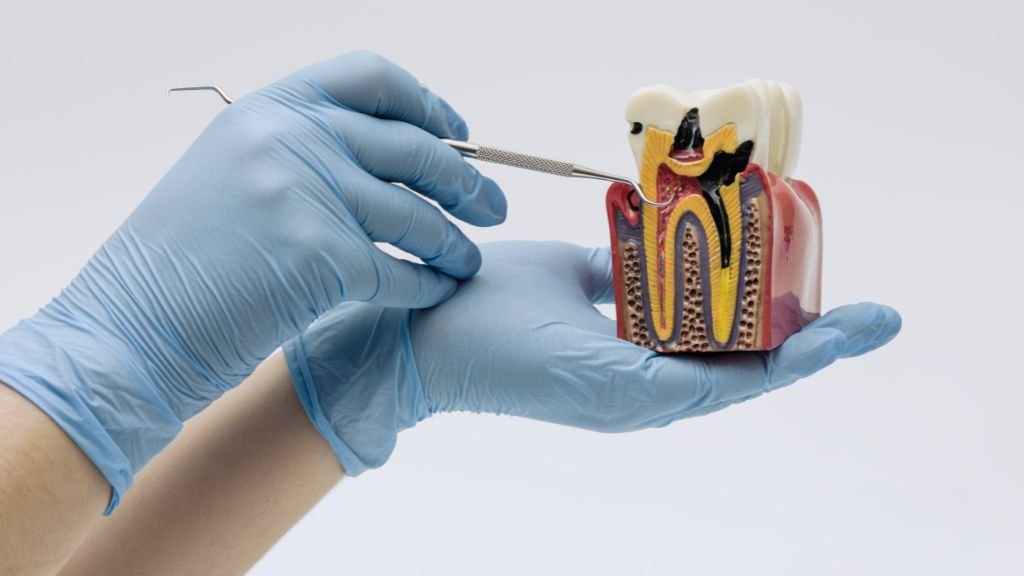
After root canal treatment, it is advisable that you avoid biting on hard foods until the permanent crown is fitted, brush twice a day using interdental brushes, and have a dental check up and clean session planned. And while sensitivity is expected, debilitating pain or swelling can point to a compromised restoration.
Why Post Operative Care is Important
A tooth that has undergone root canal treatment is structurally different. Because the internal pulp has been removed, the tooth no longer receives a blood supply, making the remaining structure more brittle over time.
Your next steps should involve:
-
Protecting the Structural Integrity
Until a permanent restoration is placed, your tooth is at a higher risk of fracture.
- Avoid hard, crunchy, or sticky foods that could dislodge a temporary filling.
- Do not use the treated tooth for heavy chewing until the final crown is secure.
A crown is often recommended for molars because it provides a ferrule effect, which acts as a protective collar around the tooth to prevent it from splitting under pressure.
-
Identifying Signs of Re-infection
While the internal nerve is gone, the surrounding tissues can still become inflamed.
- A common sign of a persistent infection is the appearance of a small bump or a hole in gum near the root.
- This is known as a sinus tract, which allows infection to drain from the bone.
If you observe a hole in gum, it suggests that bacteria may still be present, and a professional assessment is required.
Did you know? A hole in gum acts as a drainage point for a periapical abscess. This occurs when pressure from a deep infection forces a small tunnel through the bone to release pus.
Immediate Recovery and Aftercare Measures
The initial days following root canal treatment are focused on managing inflammation and protecting the temporary seal.
- Pain Management: Minor discomfort is typical as the surrounding periodontal ligaments heal.
- Mastication Precautions: Avoid chewing on the treated side until a permanent crown or filling is fitted. This prevents fracture of the weakened tooth structure.
Your Healthy Smile Dentists Suggest: Continue brushing and flossing gently. Keeping the site free of debris is essential to prevent secondary infections.
What Should Be Your Long Term Measures
A tooth with root canal treatment can still develop decay at the margin where the crown meets the gum.
- Interdental Cleaning: Use floss or interdental brushes daily. This prevents the accumulation of plaque at the base of the restoration.
- Fluoride Application: Use a high quality fluoride toothpaste to strengthen the remaining natural enamel.
- Bruxism Management: If teeth grinding occurs during sleep, a custom made mouthguard can protect the dental work from excessive pressure.
- Stop Smoking: Smoking reduces blood flow to the gums and slows down the healing processes of the body.
Perhaps the most overlooked step here is ignoring timely consultations with your dentist. These are important to monitor root health.
Warning Signs to Note
If any of the following symptoms emerge, consultation is recommended:
- A Reddish or Pimple Like Bump on the Gums: This is often a parulis, indicating that an infection is draining from the root tip through the bone.
- Discolouration: If the tooth begins to darken and is not covered by a crown, this suggests internal staining that may require internal bleaching or a prosthetic cover.
- Swelling or Mobility: Any feeling of looseness or visible swelling in the facial tissues indicates a significant issue with the seal or a potential root fracture.
Lastly, patients often ask about the root canal treatment cost when planning their dental care. However, the answer to this is not so simple.
The complexity of the root system determines the final fee, where a front tooth with a single canal is less complex to treat than a back molar with three or four canals.
This must be factored in when considering root canal treatment cost in Australia.
Your Healthy Smile Dentists Can Help
The successful preservation of a tooth following a root canal treatment must address biological, mechanical, and hygiene factors.
To help you, Your Healthy Smile Dentists in St Clair are here to support. With expertise and the experience of four decades, comfort and cost-effective procedures are available with usb with easy payment plans.
Call (02) 9670 6991 or visit Your Healthy Smile Dentist at St Clair dental clinic. You can search for an ‘emergency dentist near me’ to quickly find your way to us.
FAQ
Q1. Can a tooth with a root canal still get a cavity?
Yes, the exterior remains susceptible to decay. The outer surfaces of the tooth or the margins of a crown can still harbour plaque where bacteria can cause dental caries at the gum line. If decay reaches the internal seal, the treatment might get compromised.
Q2. What does a hole in gum near the treated tooth mean?
A hole in gum acts as a drainage point for a periapical abscess. This occurs when pressure from a deep infection forces a small tunnel through the bone to release pus. While it reduces pain, it signals a serious infection requiring urgent care.
Q3. Can I fly immediately after the root canal treatment?
Changes in cabin pressure can sometimes cause minor discomfort in a tooth that has recently been treated due to tiny pockets of air that might be trapped. However, modern endodontic techniques aim to seal the canals completely, making this less common. It is generally safe to fly 48 hours after the procedure.
Q4. Does smoking affect the success of the treatment?
Yes, it significantly impairs the healing process. Smokers have a higher rate of endodontic failure and are more likely to experience complications like persistent inflammation.
Q5. Should I take antibiotics after the procedure?
Antibiotics are generally reserved for patients with systemic symptoms like fever or spreading swelling.
Reviewed By Dr. Lekha Menon