
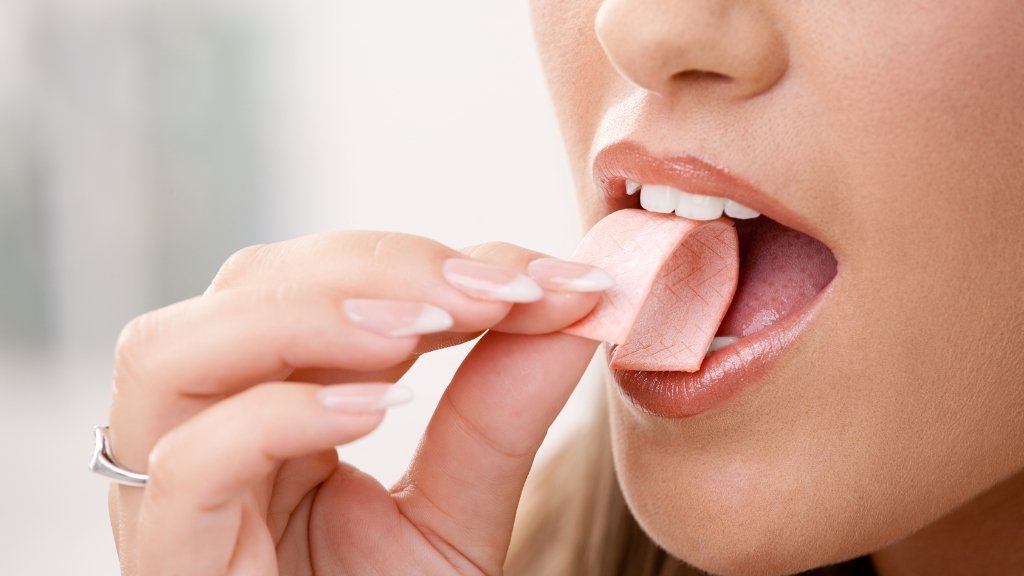
Chewing gum for 10 to 20 minutes after meals can support oral health by increasing saliva, neutralising acids and washing away food particles. In fact, the Australian Dental Association highlights how sugar-free and xylitol-based variants help you with remineralisation as well. So, is chewing gum bad for you or is it actually helpful? Let’s find out.
1. It’s a Quick Fix After Coffee or Tea
Coffee, tea and even herbal infusions can leave behind pigments that cling to tooth enamel (the hard outer protective layer of teeth). Chewing gum increases saliva flow, which helps rinse away these pigments before they settle into microscopic enamel pores.
It also helps stabilise oral pH, which is the acid-alkaline balance that affects enamel strength. Having a neutral pH reduces the risk of surface staining and early erosion.
Good to know: Chewing gum for 10 to 20 minutes after coffee can help restore a neutral pH faster. But it is important to drink a sip of water first to dilute pigments.
2. A Backup When You Can’t Brush
After takeaway meals or work snacks, leftover carbs feed the oral bacteria that produce lactic acid, a major contributor to tooth decay. The saliva secretion acts as a natural rinse and reduces the lactic acid concentration.
This process also supports remineralisation, where calcium and phosphate are deposited back onto enamel to strengthen it.
Good to know: Your mouth is most acidic within 20 minutes after eating. Always keep a small pack of sugar-free gum in your bag or vehicle.
3. Fresh Breath Before Social Events
Bad breath, clinically known as halitosis, often occurs due to bacterial breakdown of food particles, releasing sulphur compounds. It is highly noticeable during meetings and gives a poor impression about an individual. Chewing gum helps you to mask these odours while reducing bacterial stagnation.
It also mechanically dislodges tiny food debris stuck between tooth surfaces.
Good to know: Dry mouth is one of the biggest triggers of halitosis, which we’ll discuss in depth. That is why, it is equally important that you stay hydrated to extend your chewing gum’s freshness.
4. Relief for Dry Mouth During Busy Days
Dry mouth or Xerostomia can occur from medications, stress or prolonged talking. In such cases, reduced saliva makes you more vulnerable to decay and gum irritation. Chewing gum improves the lubrication and relieves the dry, uncomfortable feeling in your mouth.
This also helps you protect the oral mucosa, which is the soft tissue lining inside the mouth that can become sore when dry.
Good to know: Your saliva contains natural antimicrobial enzymes that help control harmful bacteria.
5. Support During Travel and Long Commutes
Long flights, road trips and air-conditioned spaces often cause plaque build-up. Chewing gum helps in reducing the sticky film (dental plaque) from forming.
It also improves jaw circulation and ear pressure discomfort during flights.
Good to know: Plaque can begin forming quicker if you avoid drinking water. Brush your tongue gently each morning using a soft-bristle brush with a high bristle count for better cleaning.
6. Helps To Control Binge Eating When You Are On A Diet
It is not surprising to know that frequent snacking exposes teeth to repeated acid attacks. Chewing gum can reduce the tendency of boredom eating as well as sugar cravings.
This way, it indirectly helps you maintain the diet while reducing your cavity risk.
Good to know: Every snack session restarts the enamel-weakening cycle for up to 30 minutes. Replace mid-afternoon sweets with a low-sugar gum instead of biscuits or chocolates.
7. Comfort When Wearing Masks or in Closed Spaces
Masks and closed environments can intensify breath odour due to reduced airflow. Chewing gum stimulates saliva and reduces the occurrence of volatile sulphur compounds.
It also prevents the tongue surface bacteria from becoming overly dry and coated.
Good to know: The tongue holds more bacteria than the teeth surfaces combined. We suggest including a gentle tongue scraping tool in your brushing routine.
8. Encourages Better Oral Awareness
Adopting habits like chewing gum leads to stronger oral-health routines, better hydration, brushing frequency and regular dental visits.
This contributes to healthier periodontal tissues and bone structures supporting teeth.
Good to know: Healthy gums are closely linked to reduced systemic inflammation in the body. Set calendar reminders on your phone, fitness tracker, or smartwatch for scheduling your dental consultation.
A Small Habit with Big Impact
So, is chewing gum good for your teeth? Yes, when it is sugar-free, used moderately and paired with brushing and flossing. And when is chewing gum bad for you? Only when it contains sugar or replaces proper oral hygiene.
It might seem trivial, but in daily life, chewing gum can become your oral-health ally that’s easily accessible. However, if you suffer from persistent bad breath or jaw issues that are making chewing difficult, visit Your Healthy Smile Dentists at 154 Bennett Road, St Clair for an emergency consultation.
FAQs
Q1. Is chewing gum bad for you if you chew too much?
Excessive chewing can strain the jaw muscles and may aggravate TMJ (jaw joint) pain. Limiting chewing to 10 to 20 minutes at a time is generally safer.
Q2. Does chewing gum help with bad breath?
It increases saliva and masks odours, but persistent halitosis may need dental evaluation.
Q3. Does chewing gum damage fillings or crowns?
Soft, sugar-free gum is usually safe, but very sticky or hard gums may loosen dental restorations.
Q4. Is mint gum better than fruit-flavoured gum?
Flavour does not impact dental benefit as much as being sugar-free, though mint often feels fresher longer.
Reviewed By Dr. Lekha Menon