
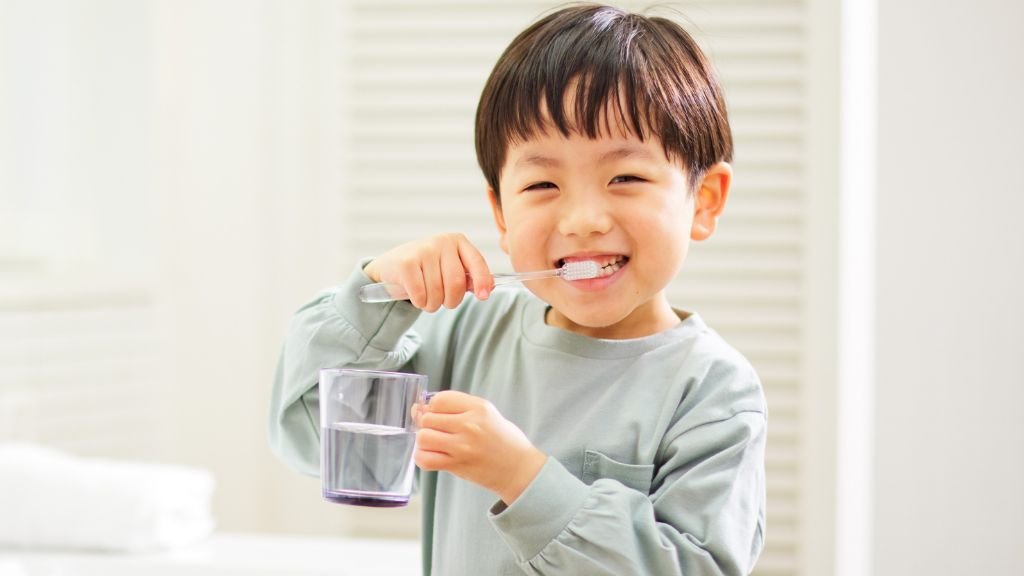
Kids often view brushing and flossing as a chore, which is why reinventing proper tooth brushing for kids proves necessary. For parents, this involves social modelling, the 120-second window, and understanding their age-related dexterity levels. Join us as we discuss them in detail and help your little ones with better oral hygiene.
1. Social Learning Theory Or The ‘Copycat’ Effect
Kids are natural mimics. They see you brushing and flossing even when you aren’t noticing, and this often ends up in some comedic moments like applying toothpaste to the mirror rather than their enamel. So, why not rethink this approach to their benefit? This is where social learning comes in.
- Often, the simplest and most effective way is to set a fixed schedule and guide kids brushing teeth alongside.
- This ‘lead by example’ strategy works because of mirror neurons in the brain, which allow learning complex physical tasks by observation.
- If possible, try brushing in front of a large mirror so they can compare their hand movements, posture, grip, and duration much more effectively.
2. The Great Debate of Brushing vs. Flossing
In the world of paediatric dentistry, the conversation around brushing vs. flossing often misses a crucial point, even for us adults, the one that they aren’t competing tasks, but complementary ones.
- While brushing removes the majority of sticky plaque from the flat surfaces, it cannot reach the interproximal spaces (where teeth touch).
- When we look at brushing vs. flossing, we see that they work together to disrupt the bacterial colonies that cause decay and gingivitis.
- This is why introducing gentle flossing as soon as two teeth are touching can be the right time.
3. The 120-Second Rule (Quadrant Timing)
To a child, two minutes often feels like an hour, and this is where insufficient effort creeps in, with no fault of their own. It is important to consider the 120-second quadrant approach in this case.
- It involves spending 30 seconds each on brushing the upper left, upper right, lower left, and lower right regions.
- This ensures that the fluoride in the toothpaste has enough contact time to facilitate remineralisation (the process of minerals like calcium and phosphate being redeposited into the tooth enamel).
- To help make it a bit fun-based activity, you may use a dedicated brushing app or their favourite tune on Youtube to provide the necessary dopaminergic reward.
4. Technique For Proper Tooth Brushing For Kids
While adults often use the ‘Modified Bass Technique’ involving angled strokes, children lack the manual dexterity for it. For proper tooth brushing for kids, the ‘Fones Method’ is found to be highly effective.
- Have them “draw big, round suns” on their teeth.
- This covers the maximum surface area and is gentle on the periodontium (the specialised tissues that support the teeth, including the gums and bone).
- It also helps them cleanse without causing gingival abrasion or mechanical damage to their gums.
5. Introduce Flossing Without The Fuss
Traditional string floss can be fiddly for little hands. In this case, floss picks are a great entry point for their brushing and flossing regimen.
- Teach your child to wrap the floss in a ‘C-shape’ around the curve of the tooth.
- This targeted approach is effective as it ensures the hidden bacteria are properly disrupted.
- It also allows the floss to dip slightly into the gingival sulcus (the shallow pocket between the tooth and the gum), which is the primary site for periodontal (gum-related) inflammation.
6. Positive Reinforcement
Your Healthy Smile Dentists often emphasise the importance of providing kids with encouraging feedback.
- Consistent brushing and flossing should be rewarded to help the habit stick, where a simple sticker chart can work wonders.
- Every seven days of successful morning and night routines could earn them a trip to the local park or an extra bedtime story.
- By following this approach of positive reinforcement, you’re ensuring a daily chore becomes a habit that they will even discuss amongst their friends, setting a positive domino effect!
7. The ‘Happy’ Visit
Finally, laying the groundwork for proper tooth brushing for kids involves making the dental clinic a positive environment. And this is where the behavioural response by parents and even the choice of dental clinic matters.
- Alleviate their fears by pointing out that exaggerated, dramatised scenes of dental visits are unrealistic.
- This builds a positive association and reduces dental anxiety.
- When a child feels comfortable at the dentist, they are more likely to take pride in their home hygiene routine and even see it as a way to show off their clean teeth to everyone they meet.
Let’s Bust Myths For Healthier Habits!
Establishing proper tooth brushing for kids is much easier when you have a professional partner in your corner. If you’ve come across a tricky spot or simply want a professional to demonstrate the Fones method to your little one, we’re here to help.
If you are looking for St. Clair dentists who make visits fun and effective for your little ones, visit Your Healthy Smiles Dentists.
FAQs
Q1. When should I take my child for their first dental check-up?
The Australian Dental Association recommends the first visit by the first birthday or within six months of the first tooth appearing.
Q2. How do I clean my baby’s gums before their teeth arrive?
Use a clean, damp cloth or a silicone finger brush to gently wipe the Alveolar Ridges (the gum pads where teeth will eventually erupt). This removes bacteria from milk and prepares the infant for the sensation of daily oral care.
Q3. At what age should we start using fluoride toothpaste?
In Australia, low-fluoride toothpaste is generally recommended from 18 months to 6 years. And while fluoride is essential for remineralisation, the concentration must be age-appropriate to prevent Fluorosis.
Q4. Why are ‘baby teeth’ so important if they eventually fall out?
Primary teeth act as space maintainers for permanent teeth. If a baby tooth is lost early due to decay, the surrounding teeth may shift, leading to malocclusion or misalignment of the bite or crowded teeth later in life.
Q5. Should my child brush their tongue?
Yes. The Dorsum or the top surface of the tongue can harbour a significant amount of bacteria and food debris. Gently brushing the tongue reduces bad breath and decreases the overall bacterial load in the mouth.
Reviewed By Dr. Lekha Menon