
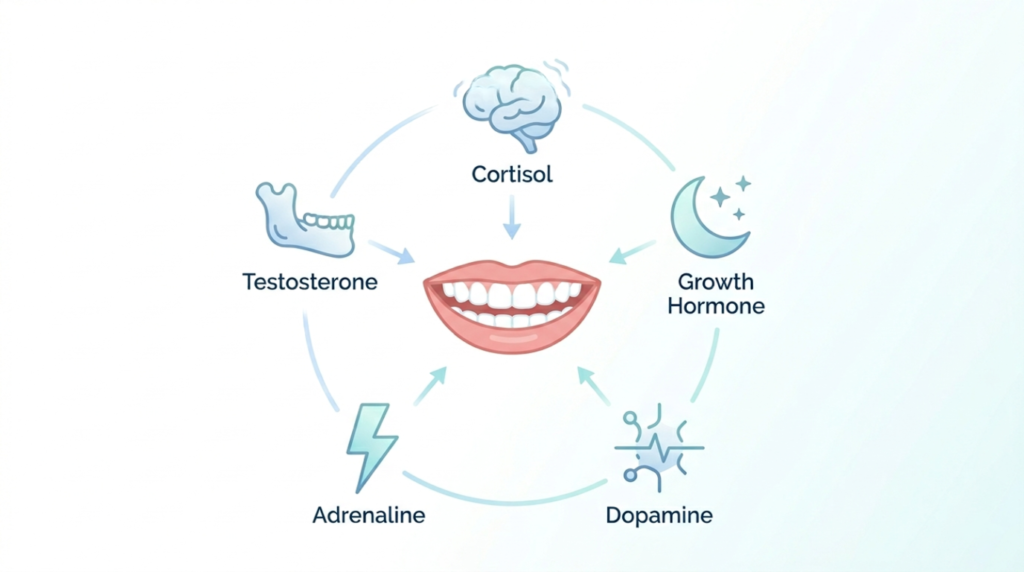
We often blame sugar and insufficient habits for any oral health issues, but hormonal fluctuations, too, can trigger gum inflammation and even bone loss in some cases. Learning about these chemical messengers helps us realise their impacts and the importance of oral health. So, what causes poor oral health, and how can preventive dentistry help you?
The Link Between Hormones and Oral Health
Before we learn the specifics, it is vital to know which key hormones are monitoring your dental environment.
When the following hormones are out of balance, your smile might pay the price:
- Cortisol: Manages your body’s inflammatory response and dictates how your gums react to plaque.
- Testosterone: Regulates the mineral density of the jawbone and the strength of the tooth’s foundation.
- Estrogen: Even in men, this hormone (converted from testosterone) is essential for maintaining healthy collagen in the gums.
- Growth Hormone: Drives the Dentinogenesis or biological repair of the tooth layer under the enamel during the deep sleep phase.
- Adrenaline: Most know that adrenaline fuels a workout, but few realise its connection to the ‘fight or flight’ response directly affects the volume of saliva produced.
- Dopamine: Influences the neurological pathways responsible for jaw muscle tension and clenching.
1. Cortisol, Stress and the Gum Connection
Have you ever noticed your gums becoming tender or bleeding more easily during high-pressure weeks? When you are under significant mental load, your body releases Cortisol to regulate the stress.
While essential for focus, high cortisol levels suppress your immune response, specifically affecting the Neutrophils or WBCs in your gum tissue.
How is this connected to your oral health?
- This makes it harder for your body to fight off Gingivitis or early-stage gum inflammation.
- It causes poor oral health during stressful periods since your gums become hyper-reactive to even small amounts of plaque.
What can be considered?
- Using a simple saline rinse (half a teaspoon of salt in warm water) to reduce osmotic pressure in swollen tissues.
2. Testosterone and Oral Health Foundation
Particularly for men in their 30s, a gradual, natural decline in Testosterone begins. When these levels shift, the rate of bone resorption can outpace bone formation.
How is this connected to your oral health?
- This hormone is vital for maintaining the Alveolar Bone (the ridge of bone that contains our tooth sockets), because if the foundation weakens, even healthy teeth can become mobile.
- Its decline during stressful periods can also make gums more reactive to plaque even as they appear completely normal.
What can be considered?
- Focus on preventive dentistry by ensuring a diet rich in Calcium and Vitamin D3. Exercising can enhance bone mineral density and the structural integrity of your jaw.
3. Growth Hormone and Sudden Sensitivity
Our Growth Hormone (GH) levels, which peak during deep sleep state, are responsible for repairing the dentine layer beneath the enamel. That is why maintaining good sleep hygiene helps in ensuring various regulatory and metabolic functions of our bodies.
How is this connected to your oral health?
- If sleep is disrupted or the body is overextended, this repair process slows down.
- This leaves the microscopic channels leading to the tooth nerve exposed, causing heightened sensitivity.
What can be considered?
- A desensitising toothpaste containing Potassium Nitrate might help de-polarise the nerve signals. Additionally, regular dental check-ups and cleans can be done to apply high-concentration fluoride varnishes that seal these exposed tubules.
4. Adrenaline and Dry Mouth
While exercising is important, the ‘rush’ hormone can cause undesirable effects in different ways.
This is because saliva aids our digestion and buffering capacity. And when its production is lacking, even healthy snacks can make you more prone to enamel erosion and decay.
How is this connected to your oral health?
- Adrenaline restricts your salivary glands and reduces your mouth’s ability to neutralise the harmful acids.
- This results in dry mouth or Xerostomia, removing your mouth’s natural cleansing property.
What can be considered?
- Utilise Xylitol-based chewing gum to stimulate natural flow. For chronic dryness, Your Healthy Smile Dentists might prescribe/administer pH-neutral oral gels to provide a synthetic protective film over the teeth.
5. Dopamine and Teeth Grinding
The Dopamine pathways that keep us focused and motivated can sometimes lead to involuntary motor activity, specifically Bruxism, i.e., the habit of grinding or clenching the teeth.
How is this connected to your oral health?
- This physical pressure causes micro-trauma to your Periodontal Ligament, or the tissue that connects the tooth to the bone.
- This is often what causes poor oral health symptoms like unexplained toothaches, flattened biting surfaces, or morning jaw fatigue.
What can be considered?
- Magnesium supplementation can be considered after discussing with your dentist. It is known to support muscle relaxation and reduce the intensity of jaw clenching. In some cases, a custom-fitted occlusal splint is also prescribed to protect the teeth.
Embrace The Changes With Correct Guidance
Maintaining oral health and overall health is crucial as we grow and age. But because hormonal changes are often invisible, preventive dentistry helps you address their impacts in a more informative way.
With Your Healthy Smile Dentists on 154 Bennett road, your family can benefit from the gentle expertise of our St. Clair dental team. Together, we can help you detect the subtle signs of bone density loss or early gum inflammation before they cause permanent damage.
To know more, book a personalised appointment for your loved ones or discover more of such insights.
FAQs
Q1. Why do my gums feel itchy or tingly when I’m overworked?
This is often a case of hormonal gingivitis. High levels of stress hormones increase blood flow to the gums and change how your tissues react to biofilm (the sticky layer of bacteria on teeth), making them feel inflamed or itchy.
Q2. Is there a link between Vitamin D supplements and hormonal oral health?
Absolutely. Vitamin D acts more like a hormone than a vitamin; it’s the key that unlocks calcium absorption for your teeth. Without it, your preventive dentistry efforts (like brushing) won’t be enough to keep your enamel hard.
Q3. Can hair loss treatments (like Finasteride) affect my oral health?
Some medications that alter hormone levels can cause hyposalivation or reduced saliva flow. If you’re using these, the importance of oral health monitoring increases, as you’ll have less natural protection against cavities.
Q4. Can hormonal changes make my breath smell bad, even if I floss?
Yes. Shifts in hormones can alter the oral microbiome, i.e., the community of good and bad bacteria in your mouth. An overgrowth of certain bacteria during hormonal spikes can produce volatile sulphur compounds responsible for bad breath.
Reviewed By Dr. Lekha Menon