
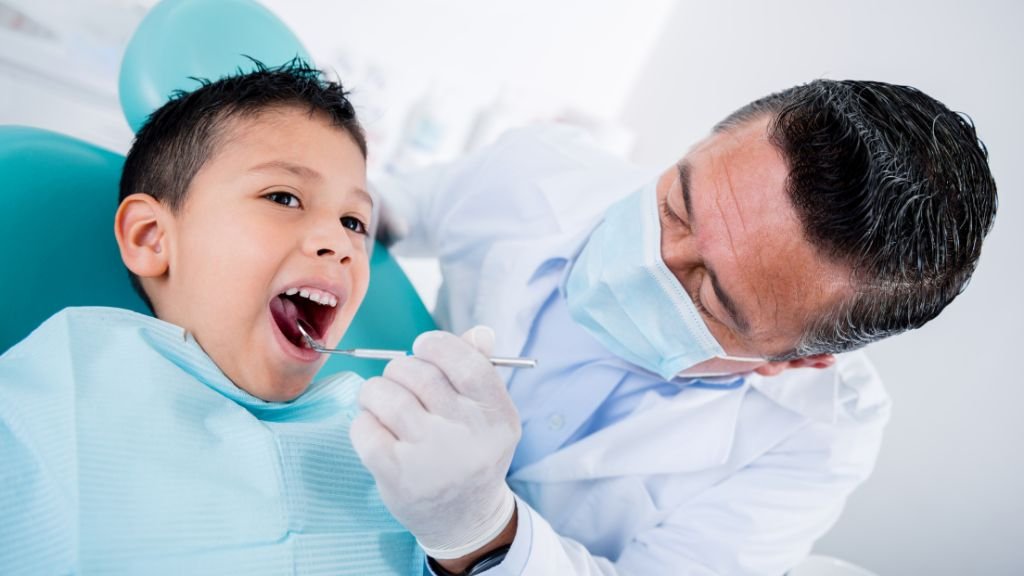
Many parents assume that dental visits for their ‘mini me’s’ can wait until school age, or when more teeth appear. However, Australian dental guidelines recommend that a child’s first visit to the dentist should happen when the very first tooth erupts, or by their first birthday.
Why so early? Because dental health begins with parents understanding the feeding habits, oral hygiene, and seemingly harmless risks that could turn into painful dental issues later. So, if you’re looking for guidance on their first dental visit, let’s help you plan better and understand the rationale behind it.
A Quick Glance For Parents
| Age | Dental focus | Why it matters |
| 0 to 6 months | Gum care and feeding advice with just parental presence | Helps in preventing bacteria buildup |
| 6 to 12 months | Ideal time to begin the baby’s first dental visit | To help you detect early risks if any |
| 1 to 3 years | Crucial period of discussing brushing habits | Prevent early childhood cavities and takes care of the fears related to dental visits |
| 3 to 5 years | Thorough prognosis on bite strength and tooth spacing | Preparing for adult teeth as milk teeth will begin to fall after by next stage |
| 6 to 12 years | To strategise permanent teeth protection measures | Avoid long-term dental issues |
On first glance, it is evident that the visit can depend on the individual case basis, and that is why we suggest beginning early. Let’s understand the reasons behind it and expectations to have at every stage.
0–6 Months: Before the First Tooth Appears
Is this the right time for the first dental visit?
Although this stage may not involve an appointment yet, it is a great time to prepare for your child’s first visit to the dentist and choose a practice that welcomes young families.
This is because even before teeth erupt, your baby’s mouth is developing rapidly. Oral bacteria can still settle in the gums and influence future tooth health.
At this stage, we often recommend:
- Gently wiping the baby’s gums after feeding using a clean, damp cloth.
- Avoiding sharing utensils to reduce bacteria transfer
- Monitoring feeding habits that may affect oral health later
These steps help reduce the risk of early childhood caries (tooth decay that affects babies and toddlers) once teeth emerge.
Questions parents can ask:
- Can you show me exactly how to clean my baby’s gums and how often to do it between feeds?
- What specific steps should we take every day to reduce the risk of infections?
- When should I schedule the baby’s actual first dental visit?
1–3 Years: Toddler Years and Developing Habits
Why is brushing so important during this age?
Toddlers are full of curiosity. But many parents quickly realise brushing a toddler’s teeth can feel like a daily challenge.
Know that baby teeth play an essential role in chewing, speech development, and guiding the eruption of permanent teeth. Losing them too early due to caries (decay caused by bacterial acids) can affect oral development.
At this stage, dentists often recommend:
- Plaque accumulation (sticky bacterial film on teeth)
- Diet patterns, sugar exposure, and early signs of cavities
- Thumb sucking or pacifier habits
Regular visits after the first dental visit help dentists monitor your child’s oral health and reinforce brushing routines.
Questions parents can ask:
- My toddler refuses to brush, can you help me with tips to ensure better oral health?
- If my child has visible white or brown spots, could this be early decay or enamel hypoplasia (incomplete enamel formation)?
- Should I stop using bottles or pacifiers now?
3–5 years: Preschool Independence With Supervision
If these teeth will fall out anyway, do cavities really matter?
By preschool age, children typically have a full set of baby teeth, which is usually 20 in total.
So the answer is yes. Untreated decay can cause pain, infection, and difficulty eating. It can also affect the eruption of adult teeth.
During check-ups at this stage, dentists may monitor:
- Occlusion (how the upper and lower teeth bite together)
- Tooth spacing and jaw growth
- Oral hygiene habits
We might also recommend topical fluoride treatments (professional fluoride application to strengthen enamel) if cavity risk is high.
Questions parents can ask:
- Is this the right age to introduce them to electric toothbrushes?
- Which nutritious, snackable foods are best for school lunches?
- What foods are most likely to cause cavities?
6–12 Years: The Age Of Transition and Adult Teeth
What changes when adult teeth start appearing?
Around age six, children begin losing baby teeth and developing permanent teeth.
This transition stage is extremely important. Permanent teeth must last a lifetime, so protecting them early matters.
We focus on:
- Detecting malocclusion (misalignment of teeth and bite)
- Monitoring the eruption of adult teeth
- Advising on sports mouthguards (protective devices for teeth during sport)
Notably, during this phase, parents also might notice that teeth appear crowded or uneven.
Questions parents can ask:
- Are the permanent teeth coming in normally or do we need an orthodontic assessment?
- Should dental sealants be applied to protect molars?
- Which sports mouthguard offers the best protection for contact sports while still being comfortable for a child?
Making Their First Dental Visit Comfortable
Children form dental memories early. Parents can help by:
- Choosing a morning appointment when the child is rested.
- Using neutral language (avoid “needle” or “hurt”).
- Role-playing at home with a toothbrush or storybooks about the dentist.
- Staying calm (extremely important as children pick up parental anxiety).
These practical steps reduce dental anxiety and increase the likelihood of regular care.
Simple Checklist To Help Parents
- Book as soon as the first tooth appears or by 12 months.
- Bring the child’s health records and list of medications.
- Avoid a sugary snack immediately before the appointment.
- Prepare one or two distractions (their favourite small toy to animate the procedure and put them at ease).
A Warm, Welcoming Introduction Matters
At Your Healthy Smile Dentists, we believe that love, learning, and lasting care should guide every child’s dental journey. Our team sees little ones every day and helps them enjoy better oral health where every visit is about gentleness.
So, if you are looking for St. Clair dentists who are as caring as they are experienced, feel free to book a personal consultation with us.
FAQs
Q1. Is the first dental visit painful?
No. It is usually gentle and observational. Most babies stay on their parents’ laps during the exam.
Q2. How often should children visit the dentist?
Most children benefit from check-ups every six to twelve months, depending on their oral health.
Q3. What if my child is afraid of the dentist?
Early visits help prevent fear. Friendly dental teams use play, conversation, and gentle techniques to build trust.
Reviewed By Dr. Lekha Menon