
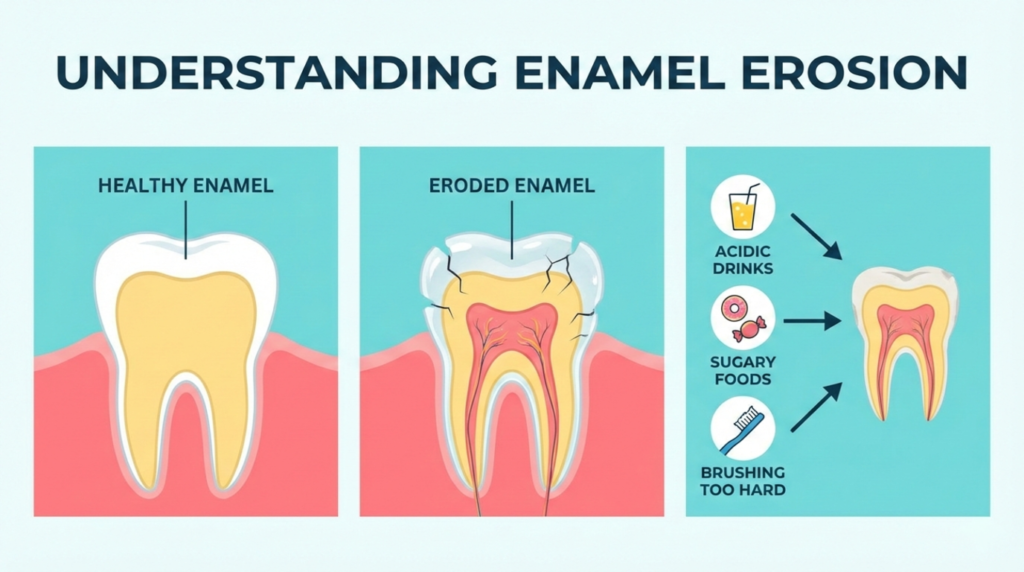
Have your teeth started feeling more sensitive than they used to? Do cold drinks or a squeeze of lemonade suddenly make you wince? If so, it may be enamel erosion. Many notice it as increased sensitivity, glossy or cupped-looking teeth, or faster staining, but clinically, it’s acid-driven loss of minerals or the gradual wearing away of the tooth’s hard, protective outer layer.
But, is it something you should worry about? This article will discuss how the right knowledge and a preventive dentistry approach help you slow it down and prevent it from getting worse.
What is Enamel Erosion? What Are its Leading Causes?
Enamel is the outer shell that protects your teeth from daily wear, temperature changes and bacteria. The erosion occurs when acids (and not germs) gradually dissolve this protective layer. Thinning enamel can quietly lead to sensitivity, cracks, discolouration and a higher risk of long-term dental treatment. And once enamel is lost, it does not grow back.
Common drivers in Australian life make enamel erosion a familiar problem. Think of espressos, citrusy fruit juices, sports drinks, lemonade and regular wine or vinegar-rich foods. Medical causes such as gastro-oesophageal reflux disease (GORD) or eating disorders also expose teeth to stomach acids.
How Do I Know If I Have It? What Are the Signs?
Many patients ask us, “Wouldn’t I notice enamel erosion straight away?” Not always, as early signs are subtle and easy to miss.
You may notice:
- Sensitivity to cold air or chilled drinks
- Teeth looking shinier or smoother than before
- Edges of teeth appearing thinner or more translucent
- Staining your teeth feels easier despite good brushing
4 Ways To Address Enamel Erosion
As enamel erosion advances, discomfort becomes harder to ignore. Teeth may react to sweet foods, brushing may sting, and small chips can appear. If you’ve recognised the signs early, answering how to strengthen enamel is important for Your Healthy Smile Dentists. Here are five practical and effective steps that work in everyday Australian life.
1. Strengthen Enamel With Fluoride and Remineralising Care
Fluoride is one of the simplest and most reliable protectors against enamel erosion under preventive dentistry. It helps rebuild weakened enamel crystals, reduces sensitivity and protects teeth against future acid attacks.
- Use a fluoride toothpaste twice daily
- Avoid rinsing immediately after brushing to let fluoride work longer
- Calcium-phosphate remineralising agents to rebuild weakened mineral structure
- Sealants or bonding on vulnerable areas to protect exposed surfaces
- Speak to your dentist about professional fluoride varnishes
2. Tweak Daily Habits Without Giving Everything Up
Stopping enamel erosion doesn’t mean you can never enjoy coffee, citrus or sports drinks again. It’s more about how and when you consume them.
- Avoid the consumption of acidic drinks on a regular basis
- Use a straw for cold, acidic beverages
- Choose water or milk as default daily drinks
- Limit sour candies and adding vinegar to your meals
- Rinse with water after acidic foods and drinks
3. Right Toothbrushing and Toothpaste Selection
Many people unknowingly brush too hard or use the wrong products, which can cause additional wear. Some even assume that brushing straight after eating is a wise step, but this can actually speed enamel wear after acidic exposure. It is because acid temporarily softens enamel, and brushing immediately can scrub it away.
- Wait 30 to 60 minutes after acidic drinks or meals
- Consider a toothbrush with soft bristles
- Avoid overly abrasive whitening products
- Adopt a gentle, circular brushing technique. Under preventive dentistry, it plays a major role in controlling enamel erosion.
4. Manage Underlying Medical or Lifestyle Causes
Sometimes enamel erosion isn’t just about diet; it may be linked to your health conditions as well. Reflux, vomiting, chronic heartburn and certain medications can repeatedly expose teeth to strong acids. If this sounds familiar to you, Your Healthy Smile Dentists urge you to:
- Speak to your GP if you suspect reflux or digestive concerns
- Let your dentist know about vomiting or eating disorder history
- Discuss night-time reflux protection strategies
- Custom dental appliances and saliva-stimulating strategies can help
What NOT To Do (Common Myths and Mistakes)
How to strengthen enamel the right way? What are the common mistakes that can harm my enamel? Our dentist St Clair, points out some common presumptions and myths below:
“Is lemon water or apple cider vinegar good for health and teeth?”
- Not for teeth. They are highly acidic and directly contribute to enamel erosion.
“If it doesn’t hurt, it surely can’t be that serious.”
- This is a common myth, as enamel erosion can progress silently for years before pain appears. Left unmanaged, it can expose dentine (the softer layer underneath). This is exactly where preventive dentistry makes the biggest difference.
“What about chewing on ice because it’s just water after all?”
- Hard ice is known to crack the already weakened enamel and even worsen its structural integrity.
“Do natural or herbal remedies deliver the promised safer results?”
- Not necessarily, as some highly advertised ‘natural’ rinses and herbal mixes can erode enamel faster.
“The DIY enamel ‘repair hacks’ online actually work, right?”
- No. Home remedies like baking soda scrubs or vinegar rinses can instead worsen the condition and irritate your gums.
To get the safest and medically backed solutions, it’s worth speaking with a dentist St Clair residents trust, especially before symptoms progress.
A Healthier Smile Always Starts with Awareness
Enamel erosion doesn’t happen overnight and it doesn’t have to control your smile. By understanding what is enamel erosion, recognising early signs and partnering with an experienced dentist, you can protect your teeth long-term.
If you’re concerned about sensitivity or enamel wear, visit Your Healthy Smile Dentists on Bennett Rd, St Clair, NSW where a simple evaluation today can save your enamel and your comfort for years to come.
FAQs
Q1. Does enamel erosion always cause sensitivity?
Not necessarily, since sensitivity is not always guaranteed, which is why dental check-ups are important. Many people have significant erosion before they feel pain.
Q2. Can stress or dry mouth worsen enamel erosion?
Reduced saliva means less natural neutralisation of acids, increasing your risk of erosion.
Q3. Which dental treatments in Sydney can help me if erosion has already occurred?
Depending on severity, dentists may recommend fluoride varnish, remineralising gels, bonding, veneers, crowns, or protective bite appliances.
Q4. Is enamel erosion the same as tooth decay?
No. Decay is caused by bacteria and plaque. Enamel erosion is caused by acid softening and dissolving enamel, even if your brushing is excellent.
Q5. Are sports drinks and flavoured water really harmful to enamel?
Yes. Even “healthy” or sugar-free acidic drinks lower oral pH and weaken enamel when consumed frequently or sipped slowly.
Reviewed By Dr. Lekha Menon