
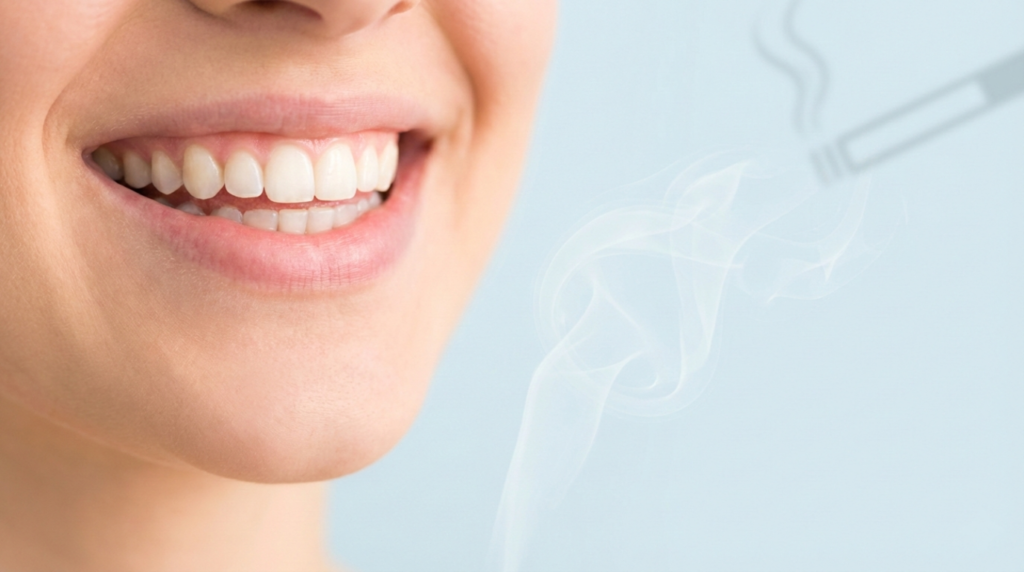
If you smoke, you probably already know it affects your lungs and heart. But many people are surprised to learn just how deeply it impacts their mouth. It includes deep staining, slower healing, a higher risk of gum disease, tooth loss and even oral cancer. What helps you address the question of how smoking harms your teeth is nicotine replacement, trigger management and a personalised strategy by a dentist which prevents a relapse. This article will reveal how small, educated steps can make a meaningful difference to support your bold decision.
What Happens Inside Your Mouth When You Smoke
Immediate Effects on Your Teeth
When you smoke, the nicotine instantly constricts the minute blood vessels in your gums. It leads to less oxygen and fewer nutrients reaching the tissues that support your teeth. This is followed by tar and smoke particles that settle on the tooth surface, gradually dulling their natural brightness. Over time, plaque forms much faster, and you may notice bad breath becoming more frequent.
Gum Damage and Tooth Loss
Your gums can be considered as the foundation that keeps your teeth stable. Smoking weakens them by reducing the blood supply and lowering your immune response when any foreign elements are introduced. This makes you prone to gum infections and harder for your body to fight them.
What might start as mild bleeding during brushing can slowly progress to gum disease, bone loss around teeth and eventually loosened contact or total tooth loss if neglected more. These are some of the serious consequences to note when discussing how smoking harms your teeth.
Reduced Saliva, Bacterial Growth and Bad Breath
A healthy mouth relies on saliva to rinse away food, neutralise acids and control bacteria. Smoking interferes with this natural protection, creating a dry environment where bacteria thrive. Also:
- Plaque hardens into tartar quickly
- Breath develops a persistent odour
- Tooth enamel becomes more vulnerable to decay
Over time, the prolonged imbalance can increase the risk of tooth decay and recurring dental infections.
Slow Healing and Treatment Complications
When undergoing extractions, gum therapy, crowns, implants or other routine procedures, gingival healing can take longer if you smoke. This is because reduced oxygen to your gum tissue impacts healing, increases the infection risk and, in some cases, leads to implant failure.
Many smokers complain in disappointment that dental recovery feels extended since their tissues struggle to repair themselves at a normal pace. That is why understanding these aspects of how smoking harms your teeth supports you when planning dental treatment.
The Most Serious Concern… the Big ‘C’
One of the most serious risks linked with smoking is oral cancer. This includes cancers of the lips, tongue, cheeks, throat and mouth lining. The positive feedback cycle is raised with duration and frequency of smoking, where it’s worsened when alcohol is combined with smoking.
This is because tobacco + the alcohol compounds combine to irritate oral tissues, accentuate cellular changes and heighten the cancer risk significantly. In such cases, a professional consultation is a must.
5 Effective Strategies to Quit Smoking
Understanding how smoking harms your teeth is indeed an appreciable first step on your part. But knowing how to take the next one matters even more. It is encouraging to know that many smokers across Australia successfully quit with the right support, and so can you. The table below talks about some of them.
| Strategies | How They Help You | Why They Work |
| 1. Create and Follow a Sincere ‘Exit’ Plan | It is important to reduce psychological dependence since it lowers risk of relapse and reduces persistent inflammation. | Structured planning strengthens cognitive control and reduces impulsive behaviour. This helps you break the nicotine reward cycle and supports a more stable withdrawal. |
| 2. Ask for Professional Support | Professional help enhances emotional resilience, improves coping mechanisms and reduces the possibility of relapse. | Professional guidance retrains neural coping responses and weakens habitual triggers linked to the dopamine reward pathway. |
| 3. Consider Nicotine Replacement Therapy (NRT) | NRT aids you during withdrawal, stability, salivary function, and promotes healthier gum circulation with mucosal healing. | NRT provides controlled nicotine without tar, carbon monoxide and toxins. This helps you in gradual neuroadaptation while improving oxygen delivery to oral tissues. |
| 4. Identify Triggers and Replace the Habit | Identification helps you break the relapse cycle, regulate oral pH, and decrease bacterial growth associated with dry mouth smoking causes. | Smoking addiction is both biochemical and behavioural. Replacing triggers disrupts your brain’s habit loop and helps to reduce cravings in frequency + strength. |
| 5. Stay Consistent and Headstrong | Your mental resilience can indeed do wonders! At our St Clair dental clinic, we often highlight how limiting stress is crucial in supporting long-term periodontal stability. | Staying aware and consistent activates your positive pathways + reduces the cortisol-driven stress responses. |
Know That You are Supported
Many individuals take several attempts before successfully quitting, where each attempt brings them closer to lasting freedom from smoking and its detriments. Learning how smoking harms your teeth does give you knowledge but you never need to face the concerns alone.
Your Healthy Smile Dentists are here to provide supportive care and medically-sound guidance on your self healing journey. Our dentist in St Clair reminds you that relapse does not mean failure and progress is not always linear.
Know that support from dental professionals, family, and friends can make the process much easier for you. Book an appointment and begin your healing journey today.
FAQs
Q1. Can vaping harm my teeth in any way?
Yes. E-cigarettes and vaping might seem less harmful and are in trend too, but the reality is, they still contain chemicals that dry the mouth and lead to decay, gum issues, and slower healing. Don’t believe in any rumours or misguided facts that are not affirmed by medical professionals.
Q2. Will my teeth get better if I quit smoking?
Many risks, including gum disease progression and healing capacity do improve after quitting. Stains may fade over time with proper care and professional clean-ups.
Q3. If I only smoke occasionally, will it still harm my teeth?
Yes. Even occasional smoking exposes your mouth to harmful chemicals that promote plaque, staining and gum disease. There is no completely safe level for smoking when it comes to oral health.
Q4. Does smoking affect dental treatments like veneers, crowns or implants?
Smoking can affect the long-term success of dental treatments, and for implants, it may increase the chance of complications. Your dentist might guide you on quitting before and after treatment.
Q5. Can my dentist tell if I smoke even if I do not mention it?
Yes. Signs such as gum recession, staining, delayed healing and certain tissue changes can indicate smoking history to us. Sharing honestly helps your dentist give better care.
Q6. Does smoking make gum disease harder to detect?
In some cases, smoking reduces bleeding in your gums due to restricted blood flow, which may mask early signs of gum disease. This is why regular dental check-ups are important.
Q7. Is chewing tobacco safer for teeth than smoking?
No. Consuming tobacco in smokeless form can still damage gums, cause tooth wear, increase decay risk and significantly raise oral cancer possibility too.
Reviewed By Dr. Lekha Menon