
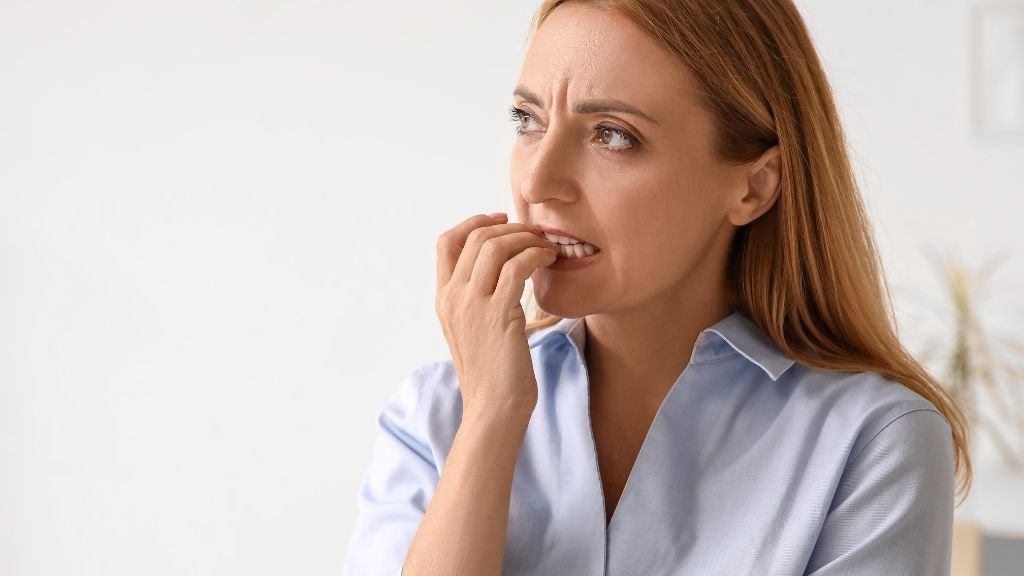
Many view nail biting as a harmless nervous tic but as a habit, it can cause long-term damage to your oral health. It includes misaligned teeth, recurring infections, eroded enamel, tiny cracks, jaw soreness, headaches, and even impacting past dental treatments. Let’s understand the full scope of these impacts and look into possible solutions.
1. Orthodontic Shifting (Malocclusion)
Consistent, targeted pressure from nail biting can cause your teeth to shift out of alignment.
Teeth are held in place by the periodontal ligament, which responds to pressure. Over time, this habit can damage teeth by causing them to tilt, rotate, or create small gaps (diastemas).
Moreover, if you wear braces, this targeted pressure of nail biting can force them out of place.
2. Gingival Trauma and Infection
Biting your nails introduces harmful bacteria directly to your gums.
Did you know? Your fingernails are a reservoir for various bacteria, including E. coli and Staphylococcus. With nail biting, you also introduce micro cuts and these pathogens into your mouth. This can lead to:
- Gingivitis: Inflammation and bleeding of the gums.
- Periodontal Abscesses: Localised, painful pockets of infection.
Apart from these, the most common effect is persistent bad breath caused by trapped bacteria and decaying organic matter.
3. Enamel Erosion and Sensitivity Issues
Nail biting acts as a constant abrasive and accelerates the enamel erosion.
The protective outer layer of our teeth, the enamel, is remarkably strong, but it isn’t designed to grind against our fingernails. Over time, this friction can wear down the biting surfaces of the front teeth.
- Dentin Exposure: As enamel thins, the underlying dentin, which contains microscopic tubules leading to the nerve, becomes exposed.
- Increased Sensitivity: This often results in sharp pain when consuming hot or cold substances.
You may also observe increased sensitivity to cold drinks and a jagged, translucent appearance at the edges of the teeth.
4. Micro-fractures
Craze lines are tiny cracks that weaken the tooth.
When you bite down with force, you are putting immense pressure on very small points of your incisors. Eventually, the craze lines created can lead to a significant chip that may require emergency dental care to repair.
If you’ve noticed a doubtful spot on your tooth, it is important to assess whether the structure is compromised before a full fracture occurs.
5. Temporomandibular Joint (TMJ) Dysfunction
Experiencing constant headaches?
Because your upper and lower front teeth do not naturally meet edge-to-edge, you must thrust your lower jaw forward into a strained, protruded position to bite the nail at a workable angle. When this position is held for prolonged periods, it puts immense strain on the temporomandibular joint (TMJ).
This causes jaw popping, facial pain, and even chronic headaches. Patients often seek emergency dental care to alleviate the acute TMJ flare-ups.
6. Damaged Restorative Work
Most dental devices cannot tolerate the repetitive churning.
If you have previously invested in crowns, veneers, or composite fillings, nail biting poses a significant risk to these materials. It is because this habit can lead to the de-bonding of veneers or the fracturing of porcelain crowns.
Lastly, this habit can also damage teeth that have already been treated, increasing costs and complexity of future treatments.
What Can You Do?
We list common queries that we receive at our St Clair clinic. However, it must be noted that since the triggers are complex, the solutions should be discussed over a personal consultation.
| Common Queries | Possible Solutions |
| How do I prevent nail biting from causing my teeth to shift? | After assessing your bite, clear aligners or a customised retainer could prevent further movement. |
| How does a professional cleaning help if I bite my nails? | A dental check up and clean allows for the removal of debris and bacteria. This helps in preventing gum diseases. |
| How can I fix the jagged or the see-through edges on my front teeth? | Composite bonding can seal the edges and protect the dentin. |
| What should I do if a nail snaps and causes a tooth to chip? | A consultation should be done immediately. Small chips can hide deeper fractures and exposed nerves. |
| Why is my jaw clicking, and can it be stopped? | This is often due to TMJ strain. Custom-fitted occlusal splints can be used to relieve the joint and allow muscle recovery. |
| How can I protect my expensive crowns from being damaged? | Re-cementing the restoration, addressing sensitivity issues, and checking for decay could be undertaken. |
Restore Your Dental Health
Breaking a long-term habit like nail biting requires time and professional support. Your Healthy Smile Dentists understand this and are ready to help you.
As your trusted dentist in St Clair, we can examine your concerns, lifestyle, and goals to help you choose care that feels right for you. Book your appointment by calling us on (02) 9670 6991. Together, we can work through a preventive or a restorative plan.
FAQs
Q1. Is nail biting considered a clinical condition?
Yes, it is clinically referred to as onychophagia. It is often categorised as a body-focused repetitive behaviour and is frequently associated with periods of high stress, anxiety, or deep concentration.
Q2. Can nail biting cause permanent damage to teeth?
If the habit persists over several years, it can lead to irreversible enamel wear, root shortening, and permanent changes to the alignment of your teeth.
Q3. Can nail biting cause my gums to recede?
Yes. The physical trauma from sharp nail shards can cause delicate tissue to pull away from the tooth, potentially increasing the risk of root decay.
Q4. Is it normal for children to bite their nails as their adult teeth come through?
It is common, but it is a habit that should be discouraged early. Chronic nail biting during the developmental stage can interfere with the eruption and alignment of adult teeth, potentially leading to the need for complex orthodontics later.
Q5. Will my teeth move back to their original position if I stop?
Minor shifting may settle, but significant gaps or rotations caused by years of pressure usually require professional alignment. Monitoring this movement is a key part of your six-monthly dental check up and clean.
Reviewed By Dr. Lekha Menon