
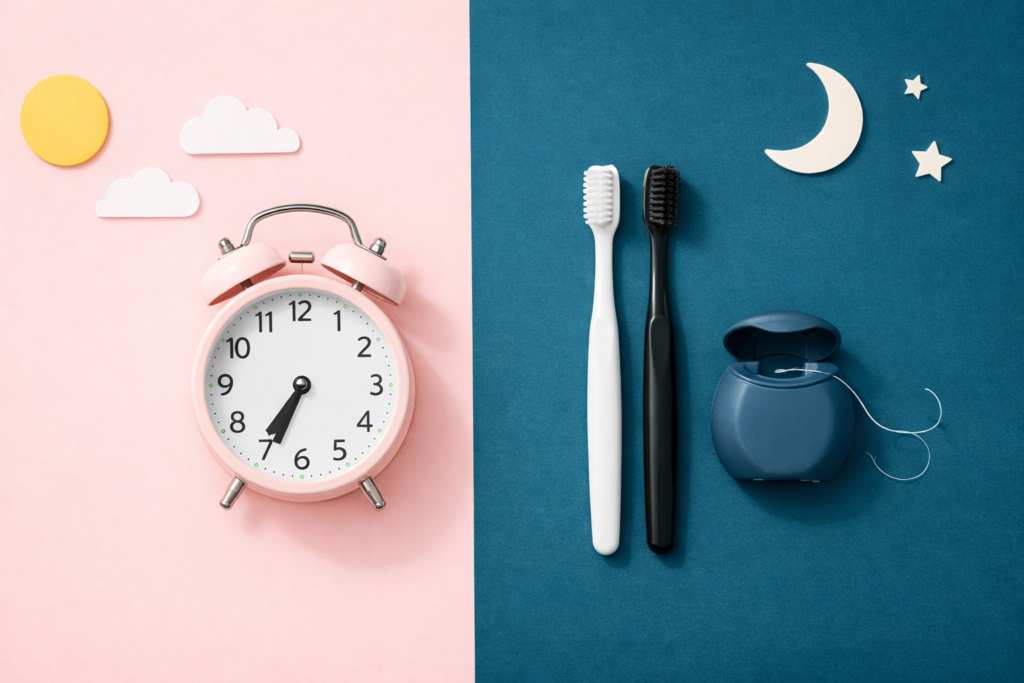
The most effective morning and night dental routines for healthier teeth focus on consistent plaque removal, fluoride protection and supporting the mouth’s natural defences. In the morning, brushing with fluoride toothpaste, and at night, retaining fluoride on the teeth are critical as reduced saliva during sleep increases the risk of decay and gum disease. This article will help you plan better, discuss what not to miss and what to avoid for a healthier smile. But first, let’s discuss their significance.
Why Routines Matter
Regular brushing, daily interdental cleaning and routine dental check-ups are proven to cut cavities and gum disease. Australian guidance recommends brushing twice daily with fluoride toothpaste and daily flossing or interdental cleaning to prevent decay and periodontal disease.
Sugar intake is a major driver of tooth decay in Australia. Public health data shows appreciable levels of daily sugar-sweetened drink consumption in younger adults (a key local risk to watch).
Effective Dental Routines for Morning vs Night
| Step | Morning routine (Start your day smartly) | Night routine (Don’t skip) |
| 1 | Rinse with water if you wake with a dry mouth, then brush for two minutes with a pea-sized smear of fluoride toothpaste. | Brush thoroughly for two minutes with fluoride toothpaste. You can spit but don’t rinse with water as this helps overnight fluoride protection. |
| 2 | Clean between teeth once daily. If mornings allow, use floss or an interdental brush. | Clean between teeth (if you didn’t do it in the morning, do it now). Interdental brushes are often better for wider spaces. |
| 3 | If you use an electric toothbrush, use soft heads and gentle pressure. | Consider a tongue scrape or brush to reduce bacteria that cause bad breath. |
| 4 | Limit sugary breakfast drinks; drink water after citrus to protect enamel. | Avoid late-night sugary snacks. If you must eat, rinse with water afterwards. |
| 5 | Finish with sugar-free chewing gum (xylitol) if you have dry mouth because it stimulates saliva. | If prescribed, apply any topical fluoride or use a mouthwash only as your dentist advises. |
What Not to Miss in Your Morning Dental Routine
1. Toothbrushing with Fluoride Toothpaste
Brush for two full minutes using a soft-bristled manual or electric toothbrush. Fluoride promotes enamel remineralisation and increases resistance to acid attacks.
2. Adopt Targeted Cleaning Approach
Angle the brush carefully at 45°. It helps disrupt plaque accumulation at the gum line, reducing the risk of gingivitis and early periodontal disease as well.
3. Interdental Cleaning (Once Daily)
Include dental floss/interdental brushes to remove plaque from areas where toothbrush bristles cannot reach.
4. Clean Your Tongue
Your tongue harbours volatile sulphur compounds and bacteria, where gentle tongue cleaning reduces halitosis and microbial load.
5. Hydration and Salivary Stimulation
Morning dry mouth, i.e, xerostomia, is common. Water supports saliva flow, which is vital for buffering oral acids and maintaining a healthy oral microbiome.
What Not to Miss in Your Night Dental Routine
1. Thorough Plaque Removal
Brush slowly and methodically for 2 mins to ensure all tooth surfaces (buccal, lingual, and occlusal) are cleaned. You disrupt the mature plaque biofilm before it mineralises into calculus.
2. Interdental Cleaning Without Exception
At night, flossing or using interdental brushes is a must for health-conscious individuals. It is because the Interproximal plaque, when left overnight, significantly increases the risk of interproximal caries and periodontal pocket formation.
3. Fluoride Retention
Fluoride at night offers prolonged enamel protection while salivary flow is reduced. Spitting without rinsing is particularly beneficial before sleep.
4. Management of Night-time Bruxism or Dry Mouth
Patients who grind their teeth (sleep bruxism) or experience xerostomia may require occlusal splints or remineralising agents as advised by a dentist in St Clair.
5. Denture or Aligner Care (If Applicable)
Removable appliances must be cleaned separately and never worn overnight unless advised. This reduces fungal infections such as oral candidiasis.
How to Make This Routine Possible
- Use a timer or an electric toothbrush that times for two minutes.
- Keep interdental brushes where you can see them as a visual cue to build the habit.
- Set a small goal, like two weeks of consistent nightly dental routines, to lock the habit.
- If you have dentures, orthodontics or dry mouth, personalise your routine with your dentist.
When Home Care isn’t Proving Enough
Even with preventive measures, problems can still show up. At that juncture, standard treatments such as professional cleaning (scale and polish), fillings for decay, and root canal therapy for infected teeth can be considered.
Some also consider crowns for heavily restored teeth, fissure sealants for vulnerable chewing surfaces, and periodontal (gum) therapy. Your dentist will explain options and evidence for each.
Your Healthy Smile Dentists Are Here to Help
Healthy teeth are built through consistency. Morning routines protect and prepare your mouth for the day, while night dental routines defend your teeth during their most vulnerable hours. When done correctly, these habits support oral health, confidence and long-term wellbeing.
Your Healthy Smile Dentists at 154 Bennett Road, St Clair can assess and recommend the correct treatments for you. If you want a dental plan that fits your lifestyle and routines, book an appointment today.
FAQs
Q. When should I brush? before or after breakfast?
Brushing before breakfast prevents softened enamel from being exposed to acidic foods immediately after brushing. If you brush after breakfast, wait 30 minutes.
Q. How often should I see the dentist?
Every 6 to 12 months, but adjusted for individual cases. Regular checks can allow you effectively target a preventive care regimen and spot problems early.
Q. Are mouthwashes necessary?
Fluoride mouth rinses can help some high-risk patients, but neither is for everyone, nor does it replace brushing with fluoride toothpaste. Children under six should generally avoid fluoride rinses.
Q. Is flossing really important if I brush well?
Yes. Toothbrushing alone cleans only about 60% of your tooth surfaces. In such a case, flossing or using interdental brushes removes plaque from interproximal areas where decay and gum disease often begin.
Q. Are electric toothbrushes better than manual ones?
Electric toothbrushes can improve plaque removal, especially for people with limited dexterity, orthodontic appliances or gum disease.
Reviewed By Dr. Lekha Menon