
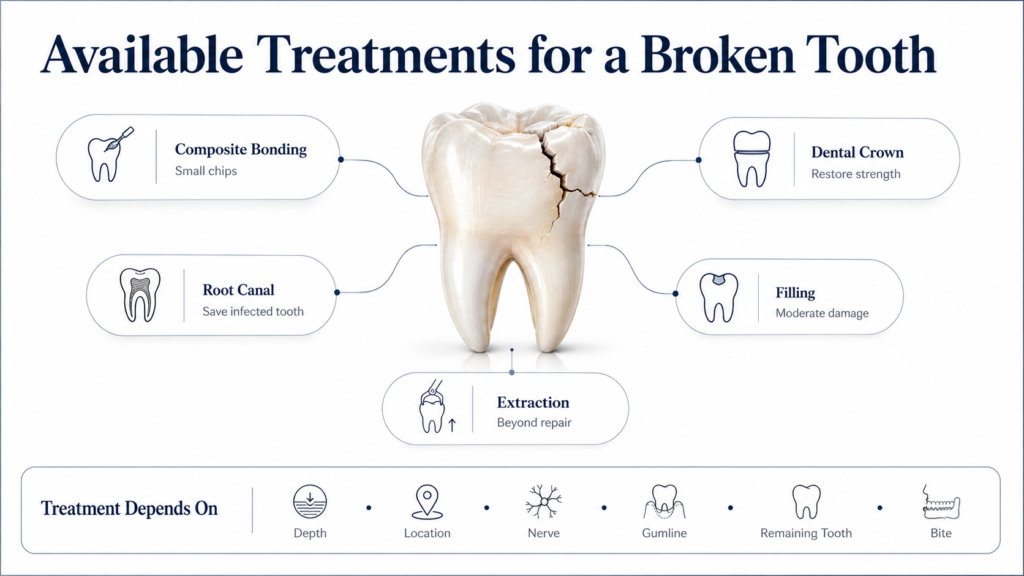
A broken tooth can arise from a sports injury, biting down on hard food, or structural degradation. Understanding its severity, when a broken tooth treatment is required, what factors determine your treatment when you search for an orthodontic near me and lastly, the before/after measures, is important. In this blog, Your Healthy Smile Dentists discuss all these in detail.
Understanding the Severity of a Broken Tooth
Not all dental fractures are equal. The direction, depth, and location of the break determine the appropriate intervention from your orthodontist.
|
Fracture Type |
Severity Level |
Primary Layers Affected |
Common Prognosis |
|
Craze lines |
Superficial | Outer enamel only | No treatment is suggested as the cracks are confined to the enamel and are typically cosmetic. |
|
Chipped tooth |
Mild to moderate | Enamel and outer dentine | Usually restored successfully with composite bonding or a dental filling, depending on the size of the chip. |
|
Fractured cusp |
Moderate | Chewing surface enamel and dentine | Commonly repaired with a dental crown or onlay to restore strength and prevent further fracture. |
|
Cracked tooth |
Severe | Extends vertically towards the pulp | Often salvageable with root canal treatment followed by a dental crown if diagnosed before the crack reaches the root. |
|
Split tooth |
Very severe | Complete separation through the crown and root | The tooth cannot usually be preserved as a single unit. Partial or complete extraction is generally required. |
|
Vertical root fracture |
Catastrophic | Begins within the root and progresses upwards | The prognosis is relatively more concerning in this case. Extraction of the affected tooth is typically the only predictable treatment option. |
Your Broken Tooth Treatment Options
Every level of clinical restoration demands careful preparation and strict post-treatment protocols to guarantee long-term success.
To help you, Your Healthy Smile Dentists lay general suggestions to follow during a broken tooth treatment through our St Clair orthodontic.
1. Cosmetic Contouring and Composite Bonding
This broken tooth treatment option is used for minor surface chips to restore shape and eliminate sharp edges.
- Before: Clean your mouth thoroughly by brushing and flossing before your visit. Avoid exceptionally hard foods that could worsen the chip before the appointment.
- After: Avoid heavily pigmented foods and drinks, such as coffee, tea, or red wine, for 48 hours while the resin fully cures. Refrain from biting hard objects, such as ice or pencils.
2. Dental Fillings and Veneers
Dental fillings and veneers are ideal for restoring moderate structural breaks and localised surface damage.
- Before: Inform your dentist of any metal allergies or historical reactions to local anaesthetics. Eat a full meal beforehand, as chewing can be difficult while numb.
- After: Wait until the local anaesthetic has completely worn off before eating to prevent biting your tongue or cheek. Mild temperature sensitivity is normal for a few days.
3. Dental Crowns
In dental crowns, custom porcelain or ceramic caps are placed over a heavily broken tooth to restore full structural integrity.
- Before: Expect precise digital imaging or moulds to map your bite during the initial consultation. This treatment generally requires two separate appointments.
- After: Avoid sticky foods like toffee or chewing gum that can dislodge the temporary cement. When flossing, slide the floss out horizontally through the side rather than pulling it up.
4. Root Canal Treatment
A root canal is required when a severe fracture penetrates the central pulp chamber, exposing the nerve to bacteria.
- Before: Take any recommended anti-inflammatory medications if advised by your dentist to manage pre-existing tissue inflammation. Eat well before the appointment due to the risk of long-lasting numbness.
- After: Do not chew or bite on the treated side until the final permanent crown is fitted. A root-treated tooth lacks internal moisture and is vulnerable to vertical splitting under heavy pressure.
5. Tooth Extraction and Replacement
Tooth extraction and replacement is often the safest and most effective broken tooth treatment option when a catastrophic split or root fracture renders it unsavable.
- Before: You are advised to disclose all your current medications (especially blood thinners or treatments that affect bone density) to our St Clair dentist. Consider soft, nutrient-dense foods at home for recovery.
- After: Maintain firm pressure on the gauze pad for thirty to sixty minutes to establish a stable blood clot. Do not smoke, use straws, or rinse vigorously for twenty-four hours to avoid a painful dry socket.
Key Factors That Determine Your Broken Tooth Treatment
When assessing a Broken Tooth, choosing the correct Broken Tooth treatment relies on several clinical variables:
- Purpose of the Affected Tooth – High-visibility front teeth require aesthetic materials like porcelain veneers, while back molars require high fracture-toughness materials like zirconia to withstand chewing forces.
- Orientation of the Fracture Line – Horizontal breaks can often be covered with a crown, while vertical cracks are prone to spreading under mechanical force and carry a higher risk of extraction.
- Depth of Damage – Superficial enamel damage needs minor adjustments, whereas dentine exposure requires coverage, and pulp exposure necessitates nerve therapy.
- Status of the Dental Nerve – We use digital X-rays and thermal tests to assess whether the nerve is healthy, inflamed, or necrotic, which determines whether a root canal is required.
- Position Relative to Your Gumline – Breaks completely above the gumline are easily accessible and highly treatable. Fractures extending below the gumline compromise the sterile environment required for dental bonding, often making the tooth unsalvageable.
- Volume of Remaining Healthy Structure – A solid foundation is required to hold a filling or support a dental crown. If insufficient tooth structure remains, alternative replacements must be considered.
The Role of Orthodontic Care
When searching for an orthodontic near me, a thorough analysis and a comprehensive solution must be sought.
In many instances, a broken tooth is the direct consequence of an uneven bite or misaligned teeth. It is concerning when the unaligned bite is noticed after your treatment. An uneven bite places excessive force and induces bruising or causes your newly done restoration to fracture.
This is where an experienced orthodontist in St Clair is considered the most reliable one. Your Healthy Smile Dentists at 154 Bennett Rd, St. Clair, offer comprehensive, long-lasting solutions that make your investment worth considering.
FAQs
1. Can a broken tooth heal on its own?
Unlike bones, teeth cannot regenerate or heal themselves. Enamel contains no living cells, so once a fracture or chip occurs, the damage is permanent and requires professional dental intervention to restore structural integrity.
2. What should I do after breaking a tooth?
Rinse your mouth with warm salt water to clean the area. If you have the broken fragment, preserve it in a clean container filled with milk or saliva. Apply a cold compress to the outside of your cheek to reduce swelling and seek a dental assessment as soon as possible.
3. Can a broken piece of a tooth be reattached permanently?
Yes, in some cases. If the fragment is clean, intact, and brought to the clinic quickly, a dentist can use specialised dental bonding agents to fuse the original piece back onto the remaining tooth structure.
4. What is the most cost-effective method to repair a chipped front tooth?
Composite resin bonding is generally the most affordable and fastest option. The material is matched to your natural tooth colour and sculpted directly onto the chip in a single appointment, though it may require replacement sooner than porcelain options.
5. What temporary measures can be taken if immediate dental access is unavailable?
You can apply temporary dental cement or dental wax, available at most pharmacies, over the jagged edge to protect your tongue and cheeks from lacerations. Stick to soft foods and avoid chewing on the affected side of your mouth.